
The historical connection between Varanasi and China reaches back more than a thousand years, when Buddhist monks crossed long distances to study sacred texts and visit important religious sites in India. Among the best-known travelers was Xuanzang (Hiuen Tsang), a Chinese Buddhist monk who visited India during the seventh century and documented its religious traditions, institutions, and cultural life.
Today, this shared heritage can be explored in and around Varanasi, especially at Sarnath, where Gautama Buddha delivered his first sermon according to Buddhist tradition. Ancient stupas, archaeological remains, Buddhist monasteries, and the celebrated Mulagandha Kuti Vihar make the area an important destination for international travelers interested in Buddhist history and the historic links between India and China.
Explore This Guide
- Xuanzang and the Ancient India–China Connection
- Why Sarnath Matters in Buddhist History
- Mulagandha Kuti Vihar: History and Significance
- Sarnath Archaeological Museum: Timings and Weekly Closing Day
- How to Reach Sarnath from Varanasi
- Where to Stay in Varanasi
- Frequently Asked Questions
Xuanzang and the Ancient India–China Connection
Xuanzang was a Chinese Buddhist monk and scholar who traveled to India during the seventh century to study Buddhist teachings and obtain religious texts. His journey took him through Central Asia and several important centers of Indian religion and learning.
His travel account, known as The Great Tang Dynasty Record of the Western Regions, describes the regions he visited, the religious communities he encountered, and the institutions associated with Buddhism and other Indian traditions. Historians study this account alongside archaeological discoveries, inscriptions, and other historical evidence.
His descriptions of Varanasi and Sarnath offer a valuable perspective on the region during his lifetime. Varanasi was an important center of religious activity, while Sarnath was associated with the Buddha’s first sermon and a long tradition of Buddhist learning.
For a modern traveler, following this historical trail means looking beyond monuments as physical structures. It means understanding how pilgrims, teachers, translators, and scholars helped Buddhist ideas travel between India and China over many centuries.
For further historical context, read Buddhism in Sarnath: An Account of Two Chinese Travellers, a study discussing the travel records of Faxian and Xuanzang.
Why Sarnath Matters in Buddhist History
Located near Varanasi in Uttar Pradesh, Sarnath is one of the most important Buddhist pilgrimage sites in India. Buddhist tradition identifies it as the place where Gautama Buddha delivered his first sermon after attaining enlightenment at Bodh Gaya. This event is commonly known as the turning of the Wheel of Dharma.
Over the centuries, Sarnath developed into a major religious center with stupas, monasteries, sculptures, and other structures. Archaeological remains provide evidence of its importance as a center of Buddhist art and learning from ancient times into the medieval period.
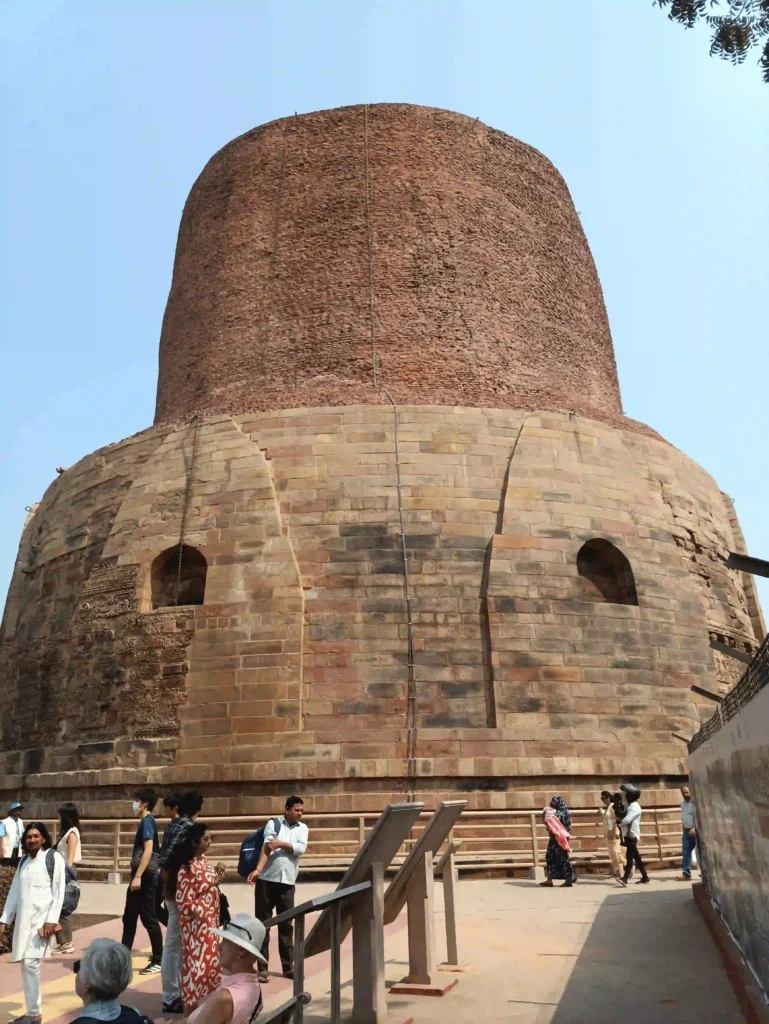
Dhamekh Stupa
The Dhamekh Stupa is one of Sarnath’s most recognizable landmarks. Its large cylindrical structure and decorated stonework make it a major attraction for pilgrims, historians, photographers, and architecture enthusiasts.
Take time to observe the monument and the archaeological remains around it. These ruins help visitors imagine the scale of the religious complex that once flourished here and understand why Sarnath remains central to Buddhist pilgrimage.
Mulagandha Kuti Vihar: History and Significance
Mulagandha Kuti Vihar is one of the most significant modern Buddhist temples in Sarnath. Built by the Mahabodhi Society and opened in 1931, it reflects the revival of Buddhist pilgrimage and worship at a site closely associated with the Buddha’s first sermon.
The temple is known for its Buddhist religious atmosphere, paintings depicting episodes from the Buddha’s life, and its association with sacred Buddhist relics. The frescoes were created by Japanese artist Kosetsu Nosu during the 1930s, adding an international artistic dimension to the temple.
The name also has a connection with the region’s older Buddhist history. Xuanzang described an ancient monastery associated with the name Mulagandhakuti in his account of India. However, the modern temple built in 1931 should not be confused with the ancient structure described in historical records.
For international visitors, this distinction is especially interesting: the archaeological remains preserve evidence of ancient Sarnath, while the modern Mulagandha Kuti Vihar demonstrates how Buddhist devotion continues to bring pilgrims from different parts of the world to the same sacred landscape.
The temple is generally described as open from sunrise to sunset. As religious activities and local arrangements may affect access, confirm the current visiting arrangements before travelling.
For official regional background, visit the Uttar Pradesh Government’s Sarnath guide.
Sarnath Archaeological Museum: Timings and Weekly Closing Day
The Sarnath Archaeological Museum preserves sculptures and other objects recovered from the archaeological site. Its collection helps explain the development of Buddhist art and the religious history of the region.
One of its most important exhibits is the Lion Capital of Ashoka, the ancient sculpture that inspired India’s national emblem. The museum also contains Buddhist sculptures, images, architectural fragments, and objects associated with different periods of Indian history.
Officially Published Visiting Information
- Opening time: Official tourism information lists 10:00 AM.
- Closing time: 5:00 PM.
- Weekly closing day: Friday.
- Location: Sarnath, Varanasi, Uttar Pradesh.
Important planning note: The official Sarnath Museum website’s visitor page lists a 9:00 AM to 5:00 PM schedule, while the Incredible India tourism portal lists 10:00 AM to 5:00 PM. Both identify Friday as the weekly closing day. Because the published opening times differ, contact the museum before your visit to confirm the current schedule.
Check the official Sarnath Museum visiting information and the Incredible India museum guide before setting out.
For enquiries, the museum website publishes these contact numbers: 0542-2595095 and 0542-2595001. Confirm that the lines are working and check current entry arrangements before relying on them.
Visitor tip: If the museum is a priority, plan your Sarnath visit for a day other than Friday. Allow time for both the galleries and the archaeological complex, and remember that the museum and outdoor monuments may follow different visiting arrangements.
How to Reach Sarnath from Varanasi
Sarnath lies approximately 9–13 km from central parts of Varanasi, depending on your starting point and route. The journey is generally made by road, using a taxi, auto-rickshaw, or another local transport option.
Use Google Maps directions from Varanasi Cantt railway station to Sarnath to check the route and estimated travel time for your journey.
How Much Time Should You Allow?
A half-day visit is a useful starting point for the main archaeological complex, Mulagandha Kuti Vihar, and the museum, depending on opening hours and your interests. Visitors who want to explore additional monasteries or spend longer in quiet reflection should allow more time.
- Start with the archaeological site: Explore the Dhamekh Stupa and the surrounding remains.
- Visit Mulagandha Kuti Vihar: Learn about the modern temple and its religious significance.
- Plan the museum separately: Confirm its opening hours and avoid Friday.
- Wear comfortable footwear: The archaeological complex involves outdoor walking.
- Respect religious customs: Follow posted instructions and remain considerate of people praying or meditating.
Where to Stay in Varanasi
If your itinerary includes both Sarnath and the historic city of Kashi, choose your hotel according to your budget, preferred location, and transport requirements. Staying in central Varanasi can make it easier to explore the ghats and temples, while convenient road access may be helpful for a visit to Sarnath.
Premium Hotels to Consider
Taj Ganges: A premium hotel option for travellers seeking established hospitality and landscaped surroundings.
BrijRama Palace: A heritage-style stay near the riverfront, suited to travellers looking for a distinctive historic setting.
Radisson Hotel Varanasi: An option to consider if you prefer full-service hotel facilities and a conventional hotel environment.
Room rates, facilities, cancellation terms, and availability vary by date and room type. Check the complete price, including taxes and applicable fees, before confirming your booking.
Planning to stay in Varanasi? Popular rooms can become limited during busy travel periods and festivals, so booking in advance is sensible when your dates are fixed.
Explore the Best Hotels in Kashi and Varanasi →
Browse the Varanasi Stay Guide →
Check Best Rates: Before booking, review the latest room prices, guest reviews, location, and cancellation policy on your preferred booking platform. Availability and final prices may change.
Explore More of Varanasi
After exploring Sarnath, spend time discovering the living traditions of Varanasi. The city’s riverfront, temples, markets, and food culture offer a different experience from the peaceful archaeological landscape.
- Historic Ghats: Walk along the riverfront and observe daily life beside the Ganges.
- Kashi Vishwanath Temple: Learn about one of Hinduism’s major pilgrimage destinations.
- Ganga Aarti: Experience the evening ceremony and check local arrangements before visiting.
- Local Food: Discover regional dishes and traditional vegetarian specialities.
Continue planning with our guides to the temples and heritage of Kashi and the Varanasi Food Guide.
Frequently Asked Questions
1. Who was Xuanzang, and what was his connection with Varanasi?
Xuanzang was a Chinese Buddhist monk and scholar who traveled to India during the seventh century. His travel records describe Indian regions and religious institutions, including places associated with Varanasi and Sarnath.
2. Why is Sarnath important to Buddhists?
Sarnath is revered as the place where Gautama Buddha delivered his first sermon after attaining enlightenment. Its stupas, archaeological remains, and monasteries make it an important destination for Buddhist pilgrims and historians.
3. What is Mulagandha Kuti Vihar?
Mulagandha Kuti Vihar is a Buddhist temple built by the Mahabodhi Society and opened in 1931. It is known for its religious significance, paintings depicting the Buddha’s life, and association with sacred Buddhist relics.
4. What are the Sarnath Museum opening hours?
The Incredible India tourism portal lists opening hours of 10:00 AM to 5:00 PM, while the museum’s official visiting page lists 9:00 AM to 5:00 PM. The museum is listed as closed on Fridays. Confirm the current opening time directly before your visit.
5. Can I visit Sarnath and Varanasi in one day?
Yes. Many visitors explore Sarnath during the day and return to Varanasi for the ghats or evening Ganga Aarti. Plan around road traffic, museum opening hours, and the time needed at each attraction.
6. Where can I find accommodation in Varanasi?
You can compare accommodation options in our Best Hotels in Kashi and Varanasi guide and browse the Varanasi Stay Guide to find a property suited to your budget and itinerary.
Conclusion: Following an Ancient Trail of Buddhist Wisdom
The connection between Varanasi and China is a reminder of how religious ideas and scholarship crossed geographical and cultural boundaries long before modern travel. Xuanzang’s historical records, the ancient monuments of Sarnath, and the continuing importance of Mulagandha Kuti Vihar each reveal a different part of this shared heritage.
For international travellers, a visit to Sarnath is an opportunity to understand more than the past. It is also a chance to experience a living pilgrimage landscape where history, art, learning, and devotion remain closely connected.
Planning your visit? Explore our Varanasi travel and hotel guides to prepare for a comfortable journey through Kashi and Sarnath.
Travel advisory: Museum hours, entry fees, temple access, and local transport arrangements can change. Check official sources before travelling.