
Varanasi, historically known to many British writers as Benares, has a long and complex relationship with Britain. During the colonial period, the city attracted the attention of administrators, scholars and travellers because of its Sanskrit learning, religious traditions and cultural importance. Today, visitors from the United Kingdom can explore this shared history while experiencing the living traditions of Kashi.
1. Varanasi and Britain: The Historical Connection
Varanasi is one of India’s most enduring centres of religious learning and pilgrimage. During British rule, the city became an important point of contact between Indian intellectual traditions and European scholarship. British administrators documented aspects of local society, while European scholars developed a growing interest in Sanskrit texts, philosophy and classical Indian literature.
The name Benares appears frequently in historical British records and publications. It refers to the same historic city now officially known as Varanasi, although historical accounts should be read in the context of the colonial period in which they were produced.
The relationship was not simply an exchange of ideas. It also developed within the unequal political structures of colonial rule. Understanding both the scholarly interest and the colonial context gives visitors a more balanced view of this period.
2. The Legacy of Sanskrit Education
One of the most significant milestones in the history of Sanskrit education in Varanasi was the establishment of the Government Sanskrit College in 1791. The institution was founded under the initiative of Jonathan Duncan, the East India Company’s Resident at Benares, and became an important centre for the study of Sanskrit learning.
The institution’s history later continued under the name Sampurnanand Sanskrit University. Its modern university status followed the Uttar Pradesh State Universities Act of 1973, with the change taking effect in December 1974.
This history illustrates how traditional Indian scholarship continued through changing educational and political systems. The university remains associated with Sanskrit and traditional disciplines, making its institutional history relevant to anyone studying Varanasi’s intellectual heritage.
Read the official history of Sampurnanand Sanskrit University.
3. British Scholarship and Indian Literature
During the late eighteenth and nineteenth centuries, European scholars showed increasing interest in Indian languages, religious texts and philosophical traditions. The Asiatic Society of Bengal, founded in Calcutta in 1784 by Sir William Jones, became one of the institutions associated with the study and translation of Asian literature and history.
Interest in Sanskrit texts contributed to the wider circulation of Indian philosophical and literary ideas in Europe. However, this scholarship was produced by different individuals with different aims, and it should not be treated as a single, uniform British interpretation of Indian culture.
Varanasi’s established traditions of Sanskrit learning made the city an important setting for this broader intellectual encounter. The city’s religious institutions, teachers and scholars formed part of a living knowledge tradition that existed before British rule and continues today.
For visitors, the most meaningful way to understand this legacy is to consider both the written historical record and the traditions that remain active in Kashi.
4. Historic Landmarks to Explore in Varanasi
Dashashwamedh Ghat
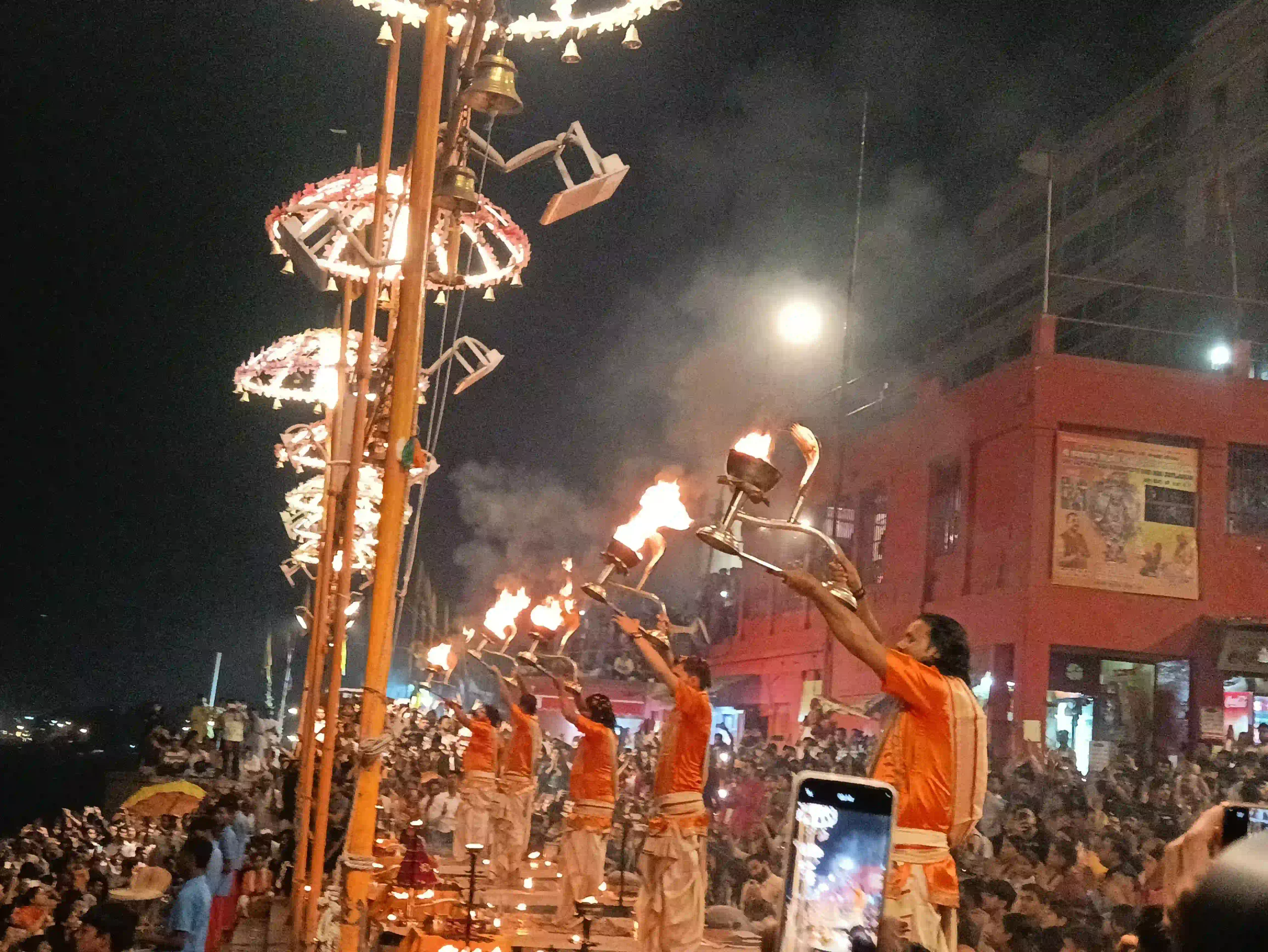
Dashashwamedh Ghat is one of Varanasi’s most recognised riverfront locations. The evening Ganga Aarti draws pilgrims and visitors to the banks of the Ganges. The ceremony is part of the city’s living religious culture rather than simply a historical attraction.
Visitors should arrive early if they want a convenient viewing position, especially during festivals and busy travel periods. Crowds, access arrangements and ceremony conditions may vary.
View Dashashwamedh Ghat on Google Maps.
Ramnagar Fort and Museum
Situated across the Ganges from the central city, Ramnagar Fort is associated with the former rulers of the region. Its historic buildings and museum collections offer another perspective on the area’s political, material and cultural history.
Opening arrangements and access to individual collections can change, so check current visitor information before travelling.
Check Ramnagar Fort information on Incredible India or view the Kashi district portal listing.
View Ramnagar Fort on Google Maps.
Sarnath Museum and the Buddhist Heritage
Sarnath, near Varanasi, is an important Buddhist pilgrimage destination associated with the Buddha’s first sermon. The Sarnath Museum preserves archaeological objects that help explain the area’s historical and artistic significance.
Check the latest opening hours and weekly closure before planning your visit. The official tourism listing provides visitor information.
Visit the official Incredible India page for Sarnath Museum.
5. How to Travel from the UK to Varanasi
Travellers from the United Kingdom generally plan their journey by flying to India and connecting to Varanasi. Depending on the departure airport, airline and season, routes may involve a connection through another Indian city or an international hub.
By Air
Varanasi is served by Lal Bahadur Shastri International Airport. Before booking, check the full itinerary, transit requirements, baggage rules and arrival time. Flight routes and schedules change, so confirm details directly with the airline.
Check the Airports Authority of India’s official Varanasi Airport page.
By Train
After arriving in another Indian city, some travellers continue to Varanasi by train. Train availability depends on the route, travel date and class. Use official railway booking channels to confirm schedules and seat availability.
Indian Railways reduced the general advance reservation period to 60 days, excluding the date of journey, from 1 November 2024. Exceptions may apply to particular trains or booking categories, so verify the rules for your chosen service.
Visit IRCTC for train bookings and read the government announcement about the reservation period.
Practical Travel Tips for UK Visitors
- Check current Indian visa and entry requirements through official government channels before departure.
- Allow enough transfer time between international flights, domestic flights and trains.
- Carry suitable footwear for walking on uneven lanes and steps near the ghats.
- Confirm local transport arrangements and hotel check-in times in advance.
- During major festivals, expect heavier crowds and allow additional time for travel.
6. Where to Stay and What to Eat
Varanasi offers accommodation ranging from guesthouses and budget hotels to premium riverside properties. The best location depends on your priorities: staying near the ghats offers access to the old city, while accommodation in other neighbourhoods may provide easier road access or a quieter setting.
Explore these guides before choosing your accommodation:
- Best Hotels in Kashi and Varanasi — accommodation ideas for different travel needs.
- Explore Kashi — discover important places and experiences in the city.
- About Kashi and Its Sacred Heritage — learn more about the city’s religious and cultural traditions.
Local Food Experiences
Food is another important part of experiencing Varanasi. Depending on the season and your preferences, you may encounter local kachori-sabzi, tamatar chaat, lassi, sweets and other regional specialities. Ask about ingredients and preparation if you have dietary restrictions, and choose food vendors according to your own comfort and hygiene preferences.
For more ideas, visit the Varanasi Food Guide.
7. Frequently Asked Questions
What was Varanasi called during British rule?
British-era records commonly used the name Benares for the city now known as Varanasi. The spelling and naming conventions varied across historical documents.
When was the Government Sanskrit College in Varanasi established?
The Government Sanskrit College was established in 1791 under the initiative of Jonathan Duncan, the East India Company’s Resident at Benares.
What is the connection between the Sanskrit College and Sampurnanand Sanskrit University?
The university traces its institutional history to the Government Sanskrit College founded in 1791. Its later development and university status belong to a different period, with the name Sampurnanand Sanskrit University taking effect in December 1974.
Which historic places should UK visitors explore in Varanasi?
Dashashwamedh Ghat, Ramnagar Fort and Sarnath Museum are useful starting points for exploring the region’s religious, political and archaeological heritage. Check current access and opening details before visiting.
Can visitors travel directly from the UK to Varanasi?
Flight options vary by departure airport, airline and date. Check current airline schedules to see whether a convenient connection is available, and confirm visa and transit requirements before booking.
Conclusion
Varanasi’s relationship with Britain is part of a wider history involving colonial administration, Sanskrit education and European interest in Indian literature and philosophy. The city’s significance, however, extends far beyond the colonial period. Its ghats, educational institutions, religious practices and nearby heritage sites reveal a culture shaped across many centuries.
For visitors travelling from the UK, learning about this history can add context to a visit. Explore the historic landmarks respectfully, check practical travel details in advance and leave time to experience the living traditions of Kashi.
Travel note: Transport schedules, museum timings, entry arrangements and local conditions can change. Confirm current details with official sources before travelling.