
Varanasi is a food lover’s destination, but enjoying Kashi’s famous food culture is not only about knowing what to eat. International travelers and first-time visitors also need to understand food hygiene, drinking water, dietary preferences, restaurant timings, allergies, street-food precautions and local dining customs.
In this Part 5 of the Varanasi Revolutionary FAQ, Questions 101–125 focus on practical food, dining and street-food decisions so you can enjoy the flavors of Kashi while making sensible choices for your health and comfort.
🍽️ Food & Safety Information Notice
Restaurant timings, menu availability, prices, hygiene standards and seasonal food availability can change. Food quality can also vary between establishments. If you have allergies, dietary restrictions or medical conditions, confirm ingredients and preparation methods directly with the restaurant or vendor. For drinking water, choose a reliable treated source or a properly sealed bottled option when the local water quality is uncertain.
What You’ll Find in Varanasi Food FAQ Part 5
- How to handle spicy and traditional Banarasi food
- Kachori-sabzi, jalebi, malaiyo and other local specialties
- Street-food hygiene and safer eating practices
- Vegetarian, Satvik and dietary requirements
- Drinking water and dairy precautions
- Food allergies and ingredient communication
- Restaurants, rooftop dining and Ganga-view experiences
- Tipping, service charges and changing food prices
- Practical advice for international travelers
Q101. Can international travelers handle spicy Varanasi food?
Yes, but it is sensible to start gradually if you are not accustomed to Indian spices. You can ask for less spicy or kam mirch, although a vendor or restaurant may not always be able to change a traditional recipe significantly.
Start with smaller portions, drink enough safe water and avoid combining several unfamiliar spicy dishes in one meal until you know how your body reacts.
Q102. What is a typical breakfast in Varanasi?
Kachori-sabzi and jalebi are among the traditional breakfast choices visitors may encounter in Varanasi. Breakfast service is generally concentrated in the morning, but opening and closing times vary by shop and locality.
If you want to try a busy local breakfast spot, check its current opening time and observe the cleanliness of the food-preparation area before ordering.
Q103. What is Malaiyo and when can I find it?
Malaiyo is a light, airy milk-based seasonal delicacy associated with Varanasi and is particularly associated with the cooler months. Its availability depends on weather, season and individual vendors.
If you specifically want to try Malaiyo, ask locally whether it is currently available rather than relying on a fixed seasonal date.
Q104. Can I find international food in Varanasi?
Yes. Tourist areas such as Assi and other popular visitor zones have restaurants and cafés offering a range of cuisines, including Indian, continental and other international-style dishes.
Availability changes by restaurant and season, so international travelers with specific dietary requirements should check the current menu before visiting.
Q105. Where can I find Satvik food in Varanasi?
Satvik meals are available at various restaurants, ashrams and traditional dining establishments. Satvik food commonly avoids ingredients such as onion and garlic, but definitions and preparation practices can differ.
If your dietary requirement is strict, do not assume that a restaurant’s use of the word “Satvik” guarantees a particular preparation standard. Confirm the ingredients directly before ordering.
Q106. How can I choose safer street food in Varanasi?
Street food can be an important part of the Varanasi experience, but popularity alone does not guarantee food safety. A busy stall with fresh preparation and high turnover can be a useful sign, but it should be considered together with other hygiene factors.
- Prefer food that is freshly cooked and served hot.
- Look for reasonably clean utensils and preparation surfaces.
- Observe how raw and cooked ingredients are handled.
- Be cautious when food has been sitting uncovered for a long time.
- Consider the cleanliness and reliability of the water or ice being used.
No visual check can guarantee that food is completely safe, so travelers should use their own judgment, especially if they have a sensitive stomach or specific health concerns.
Q107. Is Banarasi lassi worth trying?
Lassi is one of the popular traditional drinks associated with Varanasi, and visitors will find many lassi shops around tourist areas.
If you want to try it, choose a busy establishment with good visible hygiene practices and check how dairy, water and ice are handled. “Popular” does not automatically mean that every item is suitable for every traveler.
Q108. Can I find coffee and tea suitable for international travelers?
Yes. Cafés around areas such as Assi and other tourist zones commonly offer tea, coffee and lighter breakfast or snack options.
If you have specific dietary requirements, ask about milk, sweeteners and other ingredients before ordering.
Q109. What is Tamatar Chaat, and where can I try it?
Tamatar Chaat is a distinctive Varanasi-style street-food preparation made primarily with tomato and other spices and toppings. It is one of the local dishes visitors often want to experience.
Choose a well-established or busy food outlet and pay attention to preparation hygiene rather than relying only on a restaurant’s reputation.
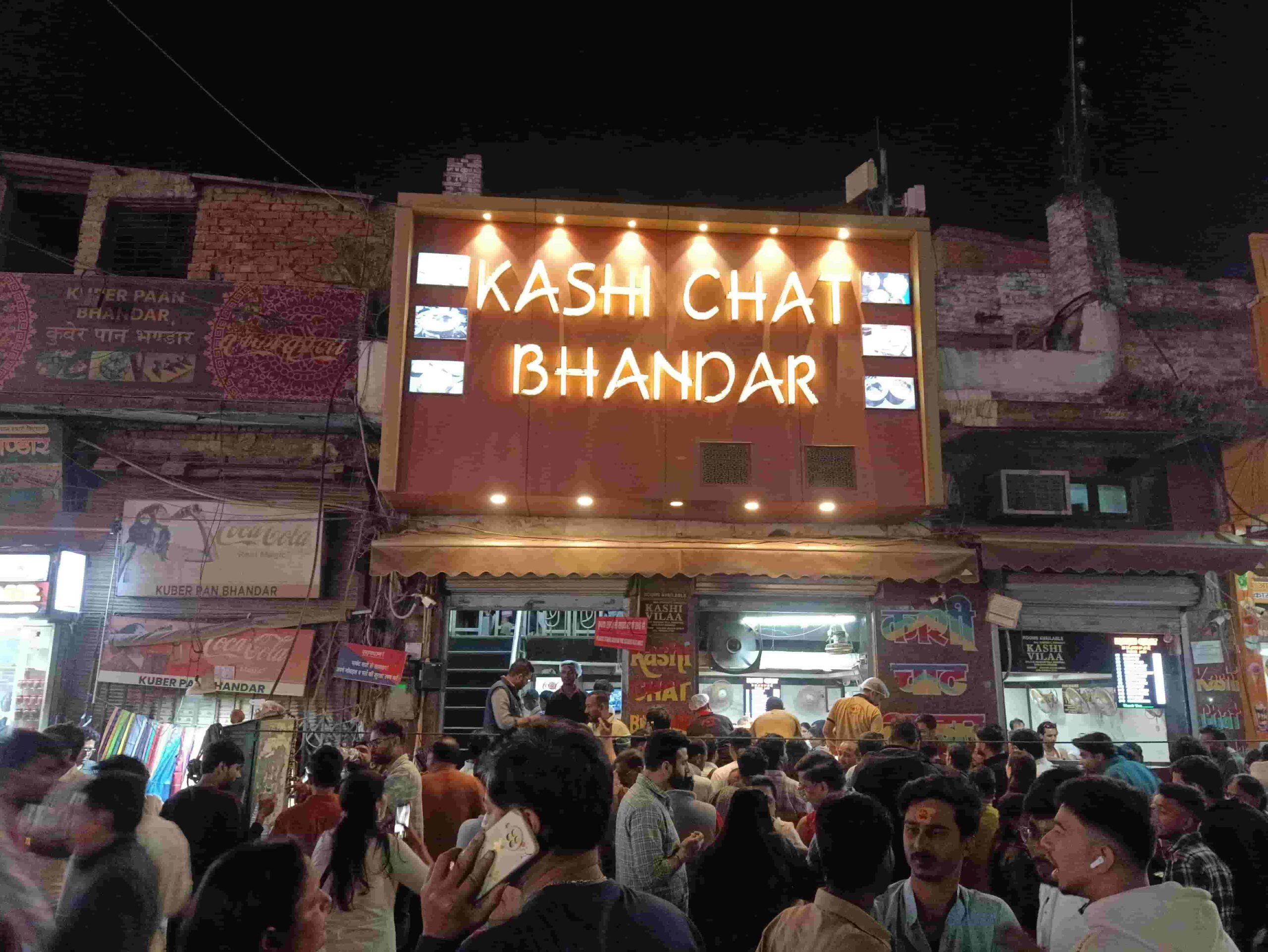
For more food-focused ideas, see our Varanasi Tamatar Chaat Guide.
Q110. Are there rooftop restaurants with Ganga or ghat views?
Yes. Some rooftop restaurants and cafés in Varanasi offer views toward the Ganga or surrounding ghats. However, the quality of the view depends on the property’s exact location, orientation, weather, crowd conditions and seating position.
If a river view is important to you, confirm the current view and seating arrangement directly with the property rather than assuming that every rooftop restaurant provides an unobstructed Ganga Aarti view.
🏨 Looking for a Stay in Varanasi?
Food experiences are closely connected with where you stay. If you want to stay closer to the ghats or specifically look for a Ganga-view property, explore our Varanasi stay resources before booking.
👉 Top 5 Best Hotels with a Stunning Ganga View
👉 Best Hotels in Kashi Varanasi
👉 Varanasi Stay Guide
Hotel availability, prices, room categories and views can change by date and season. Always check the current booking details before payment.
Q111. Do I need to eat with my hands in Varanasi?
No. Eating with the right hand is a common Indian dining practice, particularly with traditional meals, but visitors are not required to follow it.
Most restaurants serving international travelers provide spoons, forks or other cutlery. If you prefer cutlery, simply ask for it.
Q112. Is tap water safe to drink in Varanasi?
Travelers who are unfamiliar with the local water supply should take a cautious approach. When water quality is uncertain, choose properly sealed bottled water or a reliably treated drinking-water source.
- Check that bottled water is properly sealed before opening.
- Be cautious with ice if you are unsure about its water source.
- Use reliable drinking water for brushing your teeth if you have concerns about local water.
- When staying at a hotel, ask about its drinking-water treatment system.
“Bottled” does not automatically mean every product or source is reliable, so check the seal and packaging before use.
Q113. Is non-vegetarian food prohibited near temples and ghats?
There is no single blanket rule that applies to every street, restaurant or ghat area in Varanasi. Food practices and restrictions vary by locality, religious setting and individual establishment.
Near important temples and sacred spaces, visitors should respect local religious sensitivities and follow any specific rules displayed by the temple or property. If you want non-vegetarian food, choose an appropriate restaurant or hotel and confirm its current menu and location.
Q114. What time do restaurants serve dinner in Varanasi?
Many restaurants serve dinner during the evening, but exact opening and closing times vary considerably by property, neighborhood, season and day of the week.
If you have a late train, flight or sightseeing plan, check the restaurant’s current timing in advance instead of relying on a fixed city-wide dinner schedule.
Q115. How much should I budget for food in Varanasi?
Food costs vary widely depending on whether you choose street food, a local restaurant, a café, a hotel restaurant or a premium dining establishment.
Street-food items can be inexpensive, while hotel and upscale restaurant meals can cost substantially more. Treat online price estimates as planning ranges rather than fixed rates.
Q116. Should I tip at restaurants in Varanasi?
Tipping is generally discretionary rather than a universal fixed percentage. Before adding a tip, check whether a service charge has already been included in the bill.
If no service charge is included, you may leave a tip when you are satisfied with the service, but there is no need to follow a rigid 5–10% rule in every situation.
Q117. What should I do if I have food allergies?
Food allergies require extra care because recipes, sauces, spice mixes and cooking surfaces may contain ingredients that are not immediately obvious.
- Carry a written list of your allergies, especially if you are traveling internationally.
- Ask specifically about ingredients rather than simply saying that you want a dish without a particular food.
- Ask whether separate utensils or cooking surfaces are used when cross-contact is a concern.
- Do not assume that a dish is allergen-free simply because the main ingredient is safe.
If you have a severe allergy, carry any prescribed emergency medication and know how to access medical assistance during your trip.
🧳 Before You Explore Kashi
A comfortable Varanasi food and sightseeing trip also depends on practical travel preparation. A few simple items can be useful for long walks, changing weather, hygiene and everyday travel needs.
👉 See 11 Essential Travel Accessories for Ayodhya & Kashi
Affiliate Disclosure: Some product links on our site may be affiliate links. If you purchase through an eligible link, we may earn a small commission at no additional cost to you.
Q118. Is it safe to eat fresh fruit from street vendors?
Fresh fruit can be a reasonable choice, but hygiene still matters. Prefer intact fruit from a clean-looking vendor and wash or peel it yourself when practical.
Be more cautious with pre-cut fruit that has been sitting uncovered, especially in hot weather.
Q119. Is milk and dairy safe in Varanasi?
Dairy safety depends on sourcing, storage and handling. If you are concerned, choose pasteurized or packaged dairy products, or dairy that has been properly heated and stored.
Hot tea or coffee should not automatically be considered safe simply because it is hot; hygiene and storage practices still matter.
Q120. Can I find healthy or health-focused food in Varanasi?
Yes. Cafés, restaurants and some wellness-oriented establishments may offer lighter meals, vegetarian dishes, fresh juices, salads and other health-focused choices.
However, terms such as “organic,” “Ayurvedic” or “healthy” can be used in different ways by different businesses. If a specific certification or dietary standard matters to you, verify it directly with the establishment.
Q121. Is Banarasi Paan safe and does it help digestion?
Banarasi Paan is an important part of Kashi’s food and cultural identity, but it should not be described as a guaranteed digestive aid or automatically “safe.” Different paan preparations contain different ingredients.
If you want to try it, you can ask for a tobacco-free preparation. Travelers who want to avoid areca nut (supari), tobacco or other ingredients should clearly tell the vendor before ordering.
Q122. Can tourists take a Varanasi cooking class?
Cooking classes and informal food experiences may be available through local hosts, cafés, tour operators or cultural experiences. Availability changes, so check the current schedule, location, duration and inclusions before booking.
For travelers with allergies or dietary restrictions, ask whether the class can accommodate those requirements before paying.
Q123. Are there bakeries and cafés serving Western-style food?
Yes. Tourist areas of Varanasi have cafés and bakeries that may offer bread, cakes, pastries, sandwiches, coffee and other Western-style options.
Menus and opening hours vary, so international travelers should check the current menu and hygiene standards rather than assuming that every café offers the same choices.
Q124. Is table sharing common in Varanasi?
Table sharing can happen in busy, small restaurants or cafés when seating is limited, but it is not a universal rule.
If you prefer a private table, simply ask the staff. In busy local eateries, some flexibility may be helpful during peak meal periods.
Q125. What should I do if very spicy food causes discomfort?
If spicy food causes mild discomfort, stop eating the dish and choose simpler food and fluids that you normally tolerate. Dairy products such as yogurt or milk may help some people with the sensation of chili heat, but they are not a guaranteed treatment.
Do not rely on home remedies if symptoms are severe. If you experience breathing difficulty, facial or throat swelling, fainting, severe vomiting or other signs of a serious allergic reaction, seek urgent medical assistance.
🌍 Varanasi for Global Travellers
Varanasi is not only a destination for sightseeing and food. Kashi has long-standing cultural, spiritual, academic and international connections that attract travelers from many parts of the world.
If you want to explore the wider international and cultural connections of Ayodhya and Kashi, visit our:
👉 Ayodhya & Kashi: The Global Hub
This is particularly useful for international readers who want to understand Kashi beyond a conventional tourist itinerary.
🚕 Need Help Planning Your Varanasi Trip?
If you prefer an organized trip, you may consider using a local travel agency or travel service for sightseeing, airport transfers, private cars or customized itineraries.
Before booking, compare the inclusions carefully and confirm the vehicle type, pickup location, sightseeing itinerary, waiting time, cancellation terms and total cost in writing.
Important: We have not inserted an unverified travel-agency link here. Once a specific agency or affiliate booking partner is confirmed, its link can be added to this section without changing the rest of the article.
🧭 Practical Food & Dining Checklist for Varanasi
- Start with smaller portions if you are not used to spicy Indian food.
- Prefer freshly prepared and properly cooked food.
- Check visible hygiene when choosing street food.
- Use reliable drinking water when water quality is uncertain.
- Be careful with ice, raw foods and pre-cut fruit if you are unsure about handling.
- Tell restaurants clearly about allergies and dietary restrictions.
- Check current restaurant hours before late-night dining.
- Check the bill for an included service charge before tipping.
- Respect dietary and religious sensitivities around temples and sacred spaces.
- Keep a little flexibility in your food plans because local availability changes.
🔎 Continue Your Varanasi Journey
Food is only one part of experiencing Kashi. You can continue exploring the complete Varanasi FAQ series and practical travel resources:
- Varanasi Travel Guide — practical planning for your overall Kashi journey.
- Varanasi Revolutionary FAQ Part 3 — international logistics and travel safety.
- Varanasi Revolutionary FAQ Part 4 — local transport and city navigation.
- Varanasi Revolutionary FAQ Part 6 — shopping and market secrets.
- The Ultimate Varanasi Guide: 500 Questions — continue through the wider FAQ series.
🍽️ Final Food & Travel Note
Varanasi’s food culture is best experienced with curiosity and common sense. You do not need to avoid local food altogether; instead, choose food thoughtfully, pay attention to hygiene, stay hydrated with reliable drinking water and communicate clearly about allergies or dietary restrictions.
For international travelers especially, the goal is not to eliminate every possible risk but to make informed choices while enjoying the unique flavors and traditions of Kashi.
Disclaimer: This article provides general travel and food-safety information for visitors to Varanasi. Restaurant availability, prices, opening hours, food quality, local rules and travel services can change. We do not guarantee the safety, quality or availability of any particular restaurant, food vendor, hotel or service provider. Always use your own judgment and verify important details before travel.