
The ancient lanes, temples and riverfront of Kashi reveal a side of Varanasi that goes far beyond the city’s most famous landmarks. In this Varanasi Revolutionary FAQ Part 2, we answer questions 26 to 50 about sacred temples, Sarnath, local culture, heritage experiences, traditional practices and practical travel considerations.
Whether you are visiting Varanasi for the first time or returning to explore its deeper cultural side, these answers are designed to help you understand what to expect and how to plan your experience more respectfully and confidently.
Important: Timings, Entry Rules & Local Information Can Change
Temple timings, entry arrangements, festival schedules, museum timings, local services, boat operations and other travel information may change because of festivals, crowd management, weather, administrative decisions or local conditions.
Before travelling, verify time-sensitive information with the relevant official authority, temple administration, museum or local service provider.
Section 3: Exploring the Divine Temples of Kashi
26. Who is the ‘Kotwal of Kashi’ and why do devotees visit him?
Baba Kaal Bhairav is traditionally regarded as the guardian deity of Kashi and is popularly described as the Kotwal of Kashi. In Hindu tradition, devotees seek his blessings as part of their spiritual journey through Varanasi.
The title “Kotwal” is a traditional religious expression rather than an official administrative position. If you want to understand the temple’s significance, history and visiting considerations in more detail, see our guide to the Kaal Bhairav Temple in Varanasi.
27. What should I know before visiting Sankat Mochan Hanuman Temple?
Sankat Mochan Hanuman Temple is one of the important Hanuman temples in Varanasi and attracts devotees throughout the year. Crowd levels can be particularly high on religiously significant days and during special occasions.
Instead of relying on a fixed visiting time published online, check the latest temple schedule and entry instructions before your visit. For practical information about the temple, see our Sankat Mochan Hanuman Temple guide.
28. Why is Tulsi Manas Temple culturally significant?
Tulsi Manas Temple is closely associated with Goswami Tulsidas and the Ramcharitmanas. The temple is especially known for inscriptions and representations connected with the epic, making it an interesting destination for visitors interested in Hindu literature, devotional traditions and Varanasi’s cultural history.
Traditional accounts associate Tulsidas with the area, but historical claims about the exact places and circumstances connected with the composition of the Ramcharitmanas should be understood in their traditional and historical context. You can learn more in our Tulsi Manas Temple guide.
29. Can I visit the ‘Monkey Temple’ in Varanasi?
Yes. Durga Kund Temple, dedicated to Goddess Durga, is popularly known as the “Monkey Temple” because monkeys are commonly seen around the temple and surrounding area.
The temple is an important religious site as well as a distinctive part of Varanasi’s cultural landscape. Visitors should avoid feeding monkeys or provoking them and should follow the temple’s current instructions regarding footwear, photography and offerings.
30. Is there a temple dedicated to Mother India in Kashi?
Yes. Bharat Mata Temple in Varanasi is famous for its marble relief map representing the Indian subcontinent rather than a conventional deity idol. The temple offers a different experience from Varanasi’s traditional Shiva and Devi temples and is particularly interesting for visitors exploring the city’s modern historical heritage.
The temple is associated with the national and cultural history of modern India and is a useful stop for travellers interested in places beyond the main pilgrimage circuit.
31. What is special about the Nepali Temple at Lalita Ghat?
The Nepali Temple near Lalita Ghat is known for its distinctive Nepalese architectural influence and intricate woodwork. It is one of the more unusual architectural landmarks along the Varanasi riverfront.
The temple is sometimes popularly compared with Khajuraho-style architecture because of its carvings, but “Mini Khajuraho” is a popular nickname rather than the temple’s formal name. Visitors should also remember that it remains a religious site, so respectful behaviour is important.
32. Where is the New Kashi Vishwanath Temple located?
The New Vishwanath Temple, also known as the Birla Temple, is located inside the Banaras Hindu University (BHU) campus. It is dedicated to Lord Shiva and is known for its tall central tower, spacious surroundings and comparatively peaceful atmosphere.
It is important not to confuse this temple with the historic Kashi Vishwanath Temple in the old city near the Ganga. For more information, see our New Vishwanath Temple guide.
33. Are non-Hindus allowed inside all temples in Varanasi?
There is no single entry rule that applies to every temple in Varanasi. Each temple may have its own traditions and restrictions, and some areas or inner sanctums may have limited access.
International visitors should check the specific temple’s current rules before entering. Follow signs, instructions from temple staff and local customs, particularly regarding footwear, photography, dress and access to ritual areas.
Section 4: Sarnath & Local Cultural Experiences
34. Why is Sarnath a must-visit destination near Varanasi?
Sarnath is one of the most important Buddhist pilgrimage and heritage sites near Varanasi. Buddhist tradition identifies it as the place where Gautama Buddha delivered his first sermon after attaining enlightenment.
For travellers, Sarnath offers a completely different atmosphere from the crowded lanes and ghats of central Varanasi, combining Buddhist heritage, archaeology, museums and peaceful open spaces.
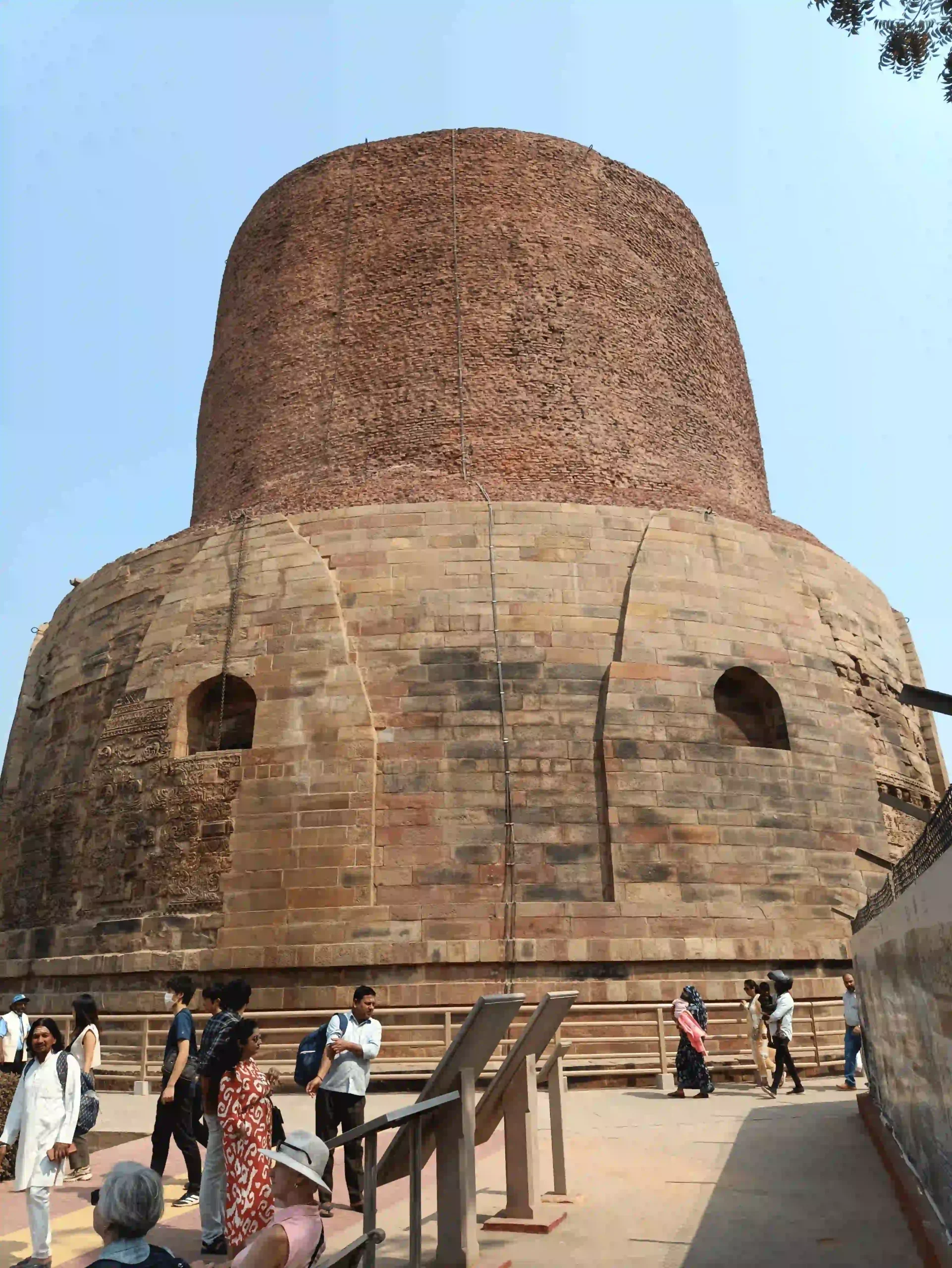
35. What are the main attractions to see in Sarnath?
The main Sarnath experience includes the Dhamekh Stupa, archaeological remains, the Sarnath Archaeological Museum and other Buddhist heritage sites. The famous Lion Capital of Ashoka is preserved in the museum and is closely connected with India’s national emblem.
Allow enough time to explore both the archaeological area and museum rather than treating Sarnath as a very short photo stop. Museum and site timings can change, so verify the current schedule before visiting.
36. What is the ‘Subah-e-Banaras’ programme at Assi Ghat?
Subah-e-Banaras is a popular morning cultural and spiritual programme associated with Assi Ghat. Depending on the day’s schedule, visitors may experience activities such as yoga, devotional or Vedic chanting, classical music and other cultural performances.
It can be a pleasant way to experience the atmosphere of the Ganga at dawn, but the exact programme and schedule may vary. Check current local arrangements before planning your morning around it.
37. Can I attend a classical music concert in Varanasi?
Yes. Varanasi has a strong classical music tradition and regularly hosts music and cultural performances. Depending on the season and event calendar, visitors may find concerts, cultural programmes and smaller traditional performances in different parts of the city.
For an authentic experience, check the artist, venue, event organiser and programme details before attending. Some performances may require advance reservations or have limited seating.
38. What is the significance of Panchganga Ghat in Kashi?
Panchganga Ghat is an important historic and religious ghat of Varanasi. Its name and significance are connected with the traditional belief in the sacred confluence of five rivers.
The five-river association should be understood as part of the religious and traditional geography of Kashi rather than as a modern geographical meeting point of five visible rivers. The ghat is also important for its historical and spiritual associations.
39. Which festivals are especially important in Varanasi?
Varanasi celebrates numerous Hindu festivals, but Dev Deepawali is one of the city’s most visually spectacular riverfront celebrations. It is observed on Kartik Purnima and is traditionally associated with the lighting of lamps along the ghats.
Mahashivratri, Shravan observances, Holi, Nag Nathaiya and other religious and cultural events also attract large numbers of devotees and visitors. Festival dates, programmes and crowd conditions vary from year to year.
For more festival-related questions, explore our Varanasi FAQ on festivals, rituals and sacred ceremonies.
40. Where can I see the Banarasi silk weaving process?
Traditional Banarasi silk weaving is associated with several weaving communities and areas of Varanasi. Depending on the workshop and local arrangements, visitors may be able to see handloom weaving and learn how Banarasi textiles are produced.
If you visit a workshop, ask whether the products are handloom or powerloom, understand the fabric and weaving details, and compare prices before purchasing. Ask permission before photographing artisans or their workspace.
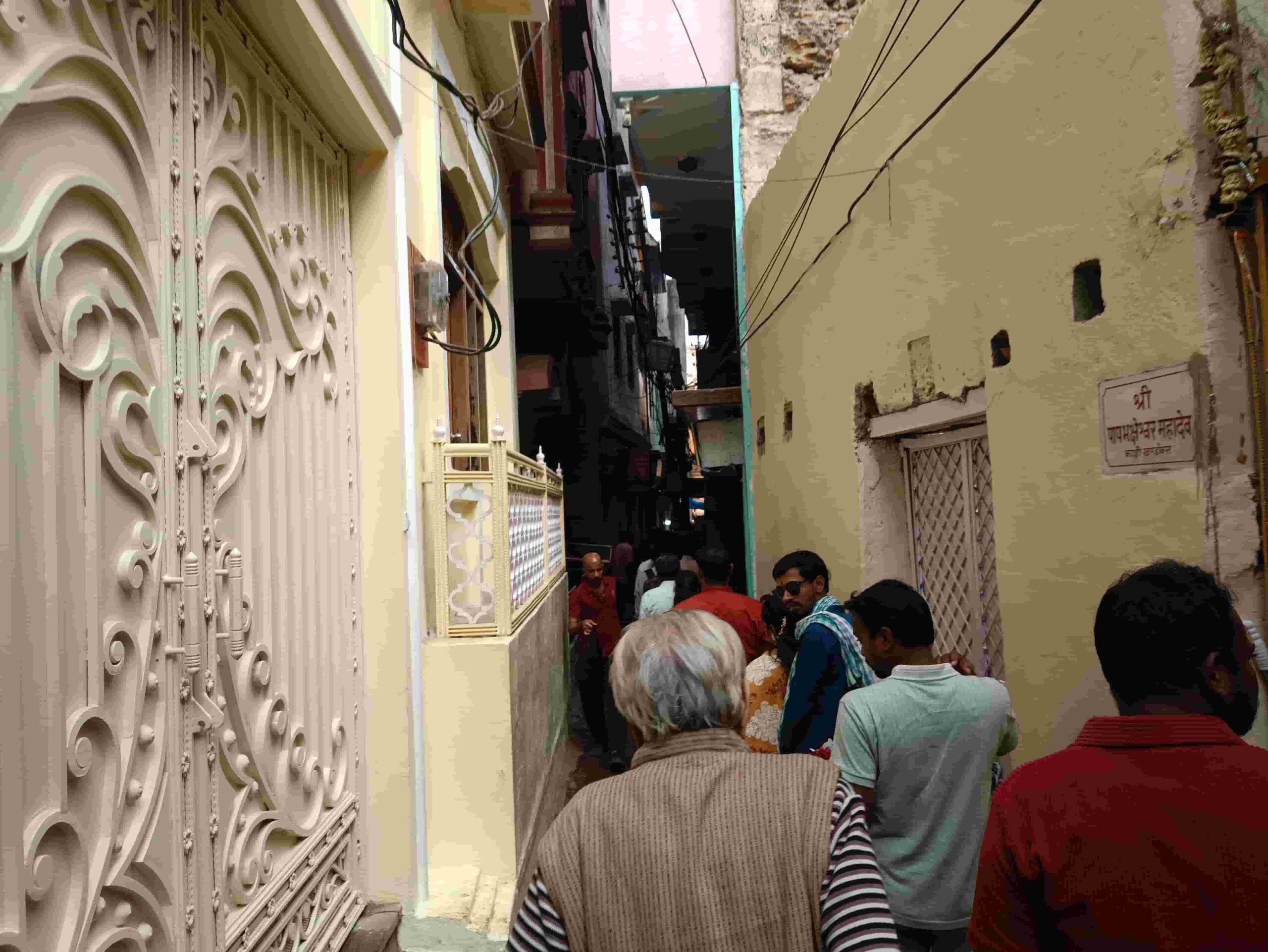
41. What is the best way to explore the narrow ‘Galis’ of Varanasi?
Walking is one of the best ways to experience the historic galis of Varanasi. The narrow lanes connect temples, old houses, small shops, food stalls and neighbourhood spaces that are difficult to understand from a vehicle.
A knowledgeable local guide can help explain the history and religious significance of places you might otherwise walk past. Wear comfortable footwear, stay aware of traffic and two-wheelers, and allow extra time because the lanes can become crowded.
42. Is it safe to try Bhang Lassi in Varanasi?
Bhang contains cannabis and can have strong psychoactive effects. Visitors should not assume that every preparation sold or offered locally has the same strength, ingredients or effects.
Regulations and permitted sale arrangements can also vary. International travellers should be particularly cautious, avoid unknown preparations, never mix intoxicating substances with driving or other risky activities, and check applicable local laws before consuming anything containing cannabis.
43. Can I take a Varanasi Heritage Walk during the day?
Yes. Heritage walks are a useful way to explore Varanasi’s historic neighbourhoods on foot. Different walks may focus on architecture, temples, local food, traditional occupations, cultural history or the city’s spiritual traditions.
Before booking, confirm the route, duration, meeting point, group size, inclusions and guide credentials. Comfortable footwear and drinking water are especially useful during a walking tour.
44. What is the significance of Lolark Kund?
Lolark Kund is an ancient sacred water tank associated with Surya, the Sun God, and with longstanding religious traditions in Kashi. The site is particularly interesting for travellers exploring the lesser-known sacred geography of Varanasi.
Religious observances and access arrangements may become especially significant during particular festivals. Visitors should respect devotees and avoid treating active religious rituals simply as photography opportunities.
45. Can visitors access libraries or manuscript collections in Varanasi?
Varanasi has important institutions associated with Sanskrit learning, manuscripts and academic research. Institutions connected with Sanskrit studies and Banaras Hindu University have significant scholarly collections.
However, a library or manuscript collection is not automatically an open tourist attraction. If you are visiting specifically for research, manuscripts or academic material, contact the institution in advance and ask about access, permissions, opening hours and identification requirements.
46. Is there a dress code for watching the Ganga Aarti?
Watching the public Ganga Aarti from the ghats generally does not require the same type of formal dress rules that may apply to participation in a temple ritual.
Nevertheless, modest and respectful clothing is appropriate because the ceremony is a deeply religious event. If you are entering a temple or participating in another ritual before or after the Aarti, check that location’s specific dress requirements separately.
47. Can I find Ayurveda and traditional wellness services in Varanasi?
Varanasi has a long association with Ayurveda and traditional Indian systems of wellness. Visitors may find Ayurvedic clinics, practitioners and wellness services in different parts of the city.
If you are considering a treatment, check the practitioner’s qualifications, ask exactly what the treatment involves and clarify the cost before starting. Do not treat traditional wellness services as a substitute for professional medical care when you have a serious health concern.
48. What does ‘Maha Smashana’ mean in Varanasi?
“Maha Smashana” is a powerful religious expression associated with Kashi’s relationship with death, cremation and spiritual liberation. In Hindu tradition, Varanasi is deeply connected with beliefs surrounding death and moksha.
The expression should be understood in its religious and philosophical context rather than as a literal administrative description of the entire city. The cremation ghats are living sacred spaces and should always be approached with sensitivity.
49. How can I find a suitable and respectful place to sit on the ghats?
Choose a clean, stable section of the ghat steps away from active religious ceremonies, cremation activity, heavy foot traffic and slippery areas. The condition of the stone steps can vary, particularly after rain or near the waterline.
A small cloth or mat can be useful if you plan to sit for a longer period. Always leave space for devotees and avoid sitting in places being used for rituals or other religious activities.
50. Can international visitors volunteer for social causes in Varanasi?
Some organisations in Varanasi work in areas such as education, community development, environmental initiatives and social welfare. Volunteer opportunities, eligibility and programme requirements vary considerably between organisations.
Before volunteering, verify the organisation’s registration or reputation, understand exactly what the programme involves and confirm whether international visitors are eligible. If working with children or vulnerable communities, follow the organisation’s safeguarding and photography rules carefully.
Quick Takeaways for Exploring Varanasi Beyond the Main Ghats
- Kaal Bhairav: A major spiritual stop traditionally regarded as the guardian deity of Kashi.
- Sankat Mochan: Check the latest temple schedule and expect larger crowds on important religious occasions.
- Sarnath: Allow enough time for the Dhamekh Stupa, archaeological area and museum.
- Varanasi Galis: Walking with a knowledgeable local guide can reveal cultural details that are easy to miss.
- Banarasi Silk: Ask about handloom, fabric and weaving details before purchasing.
- Festivals: Crowd levels and programmes can change significantly during major religious occasions.
- Sacred spaces: Respect photography restrictions, rituals, devotees and grieving families.
- International visitors: Verify local rules, service details and eligibility before booking activities or volunteering.
Continue the Varanasi Revolutionary FAQ Series
This is Part 2 of the Varanasi Revolutionary FAQ series, covering questions 26 to 50 about temples, Sarnath, culture, heritage and spiritual experiences.
Continue with Part 3: International Logistics & Travel Safety for the next section of the series.
You can also explore the complete Varanasi 500 Questions Guide for a wider collection of questions covering temples, travel, culture, logistics, spirituality and other aspects of Kashi.
Important Information Note
Varanasi is a living pilgrimage and cultural city. Temple procedures, opening schedules, festival programmes, entry arrangements, museum timings, local services and other travel information can change over time.
This guide is intended to help travellers understand the cultural and practical aspects of visiting Kashi. It should not be treated as a permanent guarantee of any particular timing, fee, facility, entry rule or service.
Before travelling, verify time-sensitive information with the relevant official temple authority, museum, local administration or service provider. Religious traditions and local customs may also differ between places and communities.
Travel responsibly, respect sacred spaces and follow current local instructions during your visit to Varanasi.