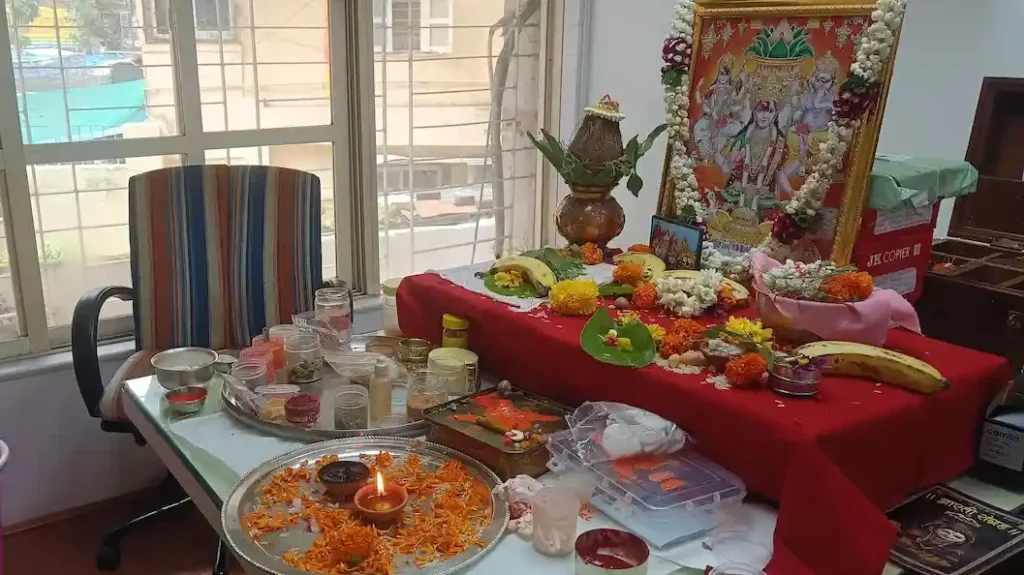
A traditional altar prepared for Laxmi Puja for business growth and prosperity.
Running a business involves planning, discipline, customer relationships, and consistent effort. For many Hindu business owners, worshipping Goddess Lakshmi is also a meaningful way to seek blessings for prosperity, stability, and responsible financial growth.
Lakshmi Puja for business growth can be performed at an office, shop, showroom, or home workspace with a clean altar and simple offerings. This guide explains the commonly followed puja preparations, samagri, step-by-step vidhi, mantra, and traditional considerations for choosing an auspicious time.
If you live outside India or prefer guidance from a priest, you can also explore our online puja booking service for Ayodhya and Kashi for information about available rituals and booking arrangements.
1. Purpose of Business Lakshmi Puja
Goddess Lakshmi is traditionally worshipped as the goddess of wealth, abundance, and prosperity. Lord Ganesha is invoked at the beginning of many Hindu rituals for wisdom and the removal of obstacles. Some traditions also include Lord Kubera, who is associated with the guardianship of wealth.
Business owners may perform this puja before opening a new shop, starting a venture, beginning a financial year, or celebrating Diwali. The ceremony is an expression of faith and gratitude rather than a guarantee of profit or freedom from business difficulties.
Sound financial planning, honest dealings, good customer service, and responsible management remain essential to long-term business success.
2. Essential Puja Samagri
Keep the required items ready before beginning the ceremony. The list below is suitable for a simple home-office or shop puja; specific traditions may require additional materials.
Clean red, yellow, or cream-coloured altar cloth
Images or idols of Goddess Lakshmi and Lord Ganesha
Lord Kubera’s image, if included in your tradition
Clean water or Ganga Jal
Roli or kumkum, chandan, and unbroken rice (akshat)
A diya and ghee or suitable lamp oil
Incense sticks, used safely in a ventilated space
Fresh flowers, such as marigolds
Seasonal fruits and traditional sweets for prasad
A clean plate or puja thali
A small vessel for water and a spoon
Prayer beads, if you wish to use them for mantra japa
Preparation tip: Keep water, flowers, and other offerings away from laptops, electrical sockets, accounting equipment, and important documents. Never leave a lit diya unattended.
3. Workplace Preparation and Altar Setup
Clean the office, shop, or workspace before the puja. Arrange the altar on a stable, clean surface where the ceremony can take place without interrupting business operations or creating a safety hazard.
Some Vastu traditions prefer the north-east or east side for a place of worship. If the layout of your workplace does not permit this, choose a clean and convenient location instead of disrupting the practical use of the premises.
Clean the chosen area and arrange the altar cloth.
Place the images or idols securely on the platform.
Arrange the flowers, diya, incense, water, and offerings.
Switch off or safely move equipment that could be affected by flame, smoke, or water.
Sit comfortably and take a moment to settle your thoughts before beginning.
You may sprinkle a small amount of water in the puja area if appropriate. Avoid splashing sacred water onto electronics, business records, or electrical fittings.
4. Begin with Lord Ganesha
Many Hindu puja traditions begin by invoking Lord Ganesha. Offer flowers, akshat, and a chandan or kumkum tilak according to your family tradition.
With folded hands, express your intention to conduct business honestly, make wise decisions, fulfil commitments, and work toward stability and prosperity. This personal prayer or sankalp can be simple and sincere.
Offer flowers, kumkum, akshat, and a little chandan to Goddess Lakshmi. Present fruits or sweets as naivedya, according to your tradition.
If your family or priest includes Lord Kubera in the ceremony, place his image alongside the other deities in the arrangement followed by your tradition. There is no need to treat one specific arrangement as compulsory for every household or business.
Pray for wisdom in financial decisions, fairness toward employees, good relationships with customers, and the ability to use earnings responsibly.
6. Writing Shree and Swastik on Business Records
In many Hindu traditions, the symbols Shree (श्री) and Swastik (स्वस्तिक) are associated with auspicious beginnings. Some business owners write them in a new ledger, on a puja notebook, or on a designated opening-day document.
If you wish to follow this custom, use a separate sheet or a suitable place on a new ledger. Do not mark computer screens, keyboards, electronic equipment, official records, or documents where the markings could interfere with their use.
These symbols express religious and cultural significance; they should not be understood as a substitute for accurate bookkeeping, tax compliance, or sound financial controls.
7. Lakshmi Mantra and Japa
A commonly recited mantra in the worship of Goddess Lakshmi is:
ॐ श्रीं ह्रीं श्रीं महालक्ष्म्यै नमः
Om Shreem Hreem Shreem Mahalakshmyai Namah
You may chant the mantra slowly and attentively. Some devotees repeat it 108 times using prayer beads; others follow a shorter practice according to their time, faith, or family tradition.
Focus on devotion, gratitude, and the intention to conduct your business with integrity. The number of repetitions should not be presented as a guarantee of financial results.
8. Aarti and Prasad
Conclude the puja with aarti if it forms part of your tradition. Keep the lamp at a safe distance from paper, curtains, packaging, and other flammable materials.
Offer a prayer of gratitude and distribute the prasad among family members, colleagues, or employees who wish to receive it. Participation should be voluntary and respectful of different beliefs in the workplace.
After the ceremony, return the workspace to normal use and store the puja items safely.
9. Choosing an Auspicious Time for Business Puja
Some devotees prefer Fridays, Diwali, Pushya Nakshatra, or other dates considered auspicious in their regional traditions for Lakshmi worship or new beginnings.
The appropriate muhurta can vary with the purpose of the ritual, location, local panchang, and family tradition. A date considered suitable for a routine puja may not automatically be the preferred time for an office inauguration, signing a major agreement, or starting a new venture.
Regular workplace puja: Choose a convenient time when the premises are clean and the ceremony can be performed calmly.
New office or shop opening: Consult a local panchang or a knowledgeable priest if you want to follow a specific muhurta.
Diwali Lakshmi Puja: Follow the locally applicable festival timings and your family tradition.
Overseas businesses: Check timings for the actual city where the puja will be performed.
Auspicious timings are location- and date-specific. Confirm them for your city rather than relying on a generic time listed for another region.
10. Practical Workplace Practices for a Positive Environment
A clean, welcoming, and organised workplace can support a positive experience for employees, customers, and business partners. Alongside personal religious practices, consider the following everyday habits:
Keep the reception and entrance clean and well lit.
Maintain orderly accounts and review cash flow regularly.
Communicate clearly with customers and suppliers.
Keep flowers and decorative items fresh and hygienic.
Use incense or a diya only where permitted and safe.
Respect colleagues who do not wish to participate in religious activities.
Some households decorate the entrance with flowers or keep a small floral arrangement as a traditional gesture of welcome. Treat this as a decorative custom, not as a proven method of absorbing negative energy or increasing sales.
11. Online Pandit Booking from Ayodhya and Kashi
If you are overseas, have a busy schedule, or prefer guidance from a priest, you may wish to enquire about an online puja through Book Ayodhya Kashi.
Before booking, explain that the ritual is intended for a business, shop, office, or new venture. You can enquire about the appropriate puja, the sankalp details required, the available date and time, and whether the ceremony can be conducted live online.
Enquire About Online Puja Services
Visit our dedicated English booking page for information about puja services from Ayodhya and Kashi, the booking process, and the applicable dakshina or service arrangements.
Booking note: Availability, ritual requirements, and dakshina may vary depending on the puja and the arrangements confirmed at the time of booking. Please check the current details on the booking page before proceeding.
For a personalised enquiry, provide only the details requested through the booking process. If a sankalp is required, confirm the necessary name, business name, gotra (if known), location, and preferred date directly through the available booking channel.
12. Frequently Asked Questions
Can I perform Lakshmi Puja at my office or shop?
Yes. Many business owners perform a simple Lakshmi Puja at their workplace. Prepare a clean, safe altar and follow your family or regional tradition.
Which direction should I face during business Lakshmi Puja?
Some Vastu traditions prefer facing east or north during worship. Follow your tradition where practical, but do not treat a particular direction as a universal requirement for every puja.
Which mantra can I chant for prosperity?
One commonly recited mantra is “Om Shreem Hreem Shreem Mahalakshmyai Namah.” Chant it with devotion and concentration according to your preferred practice.
Can NRIs book an online Lakshmi Puja?
You can enquire through our online puja booking page about available services, dates, arrangements, and whether a live online ceremony can be accommodated.
Is the puja dakshina fixed?
Dakshina and service arrangements may vary according to the ritual and the arrangements available. Please consult the online booking page for current information rather than relying on a fixed amount quoted in this article.
Does Lakshmi Puja guarantee business growth?
No ritual can guarantee a particular financial outcome. For devotees, the puja is an expression of faith and a prayer for prosperity. Business growth also depends on planning, market conditions, customer relationships, and responsible management.
Begin Your Business Journey with Faith and Purpose
Lakshmi Puja can be a meaningful occasion to express gratitude, reflect on your responsibilities, and set positive intentions for the future. Combine your spiritual practice with ethical business decisions and consistent effort.
To explore available rituals and enquire about online arrangements, visit our dedicated booking page.