
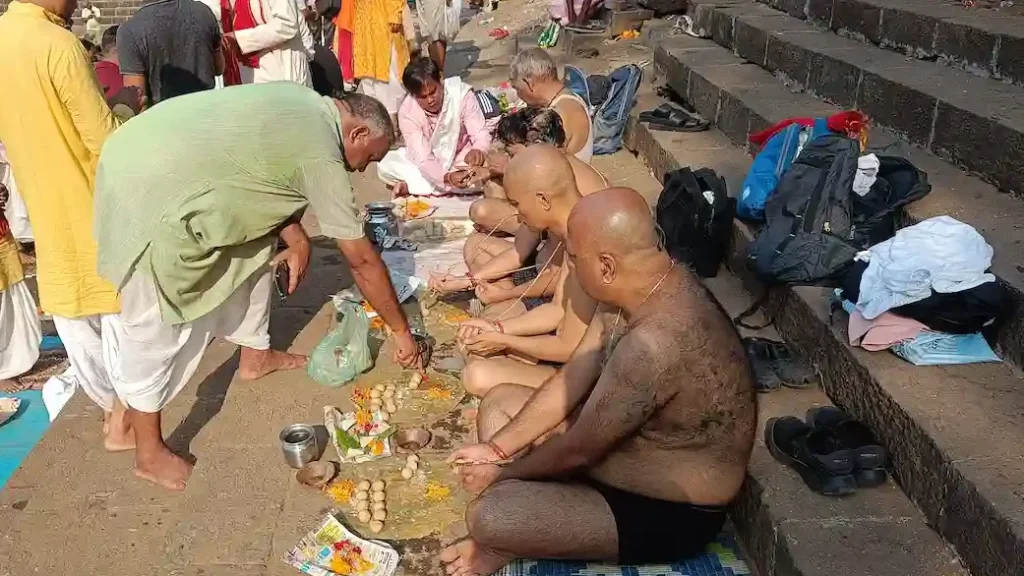
Pitru Pujan, Tarpan and Shraddha are traditional Hindu practices performed to remember and honour departed ancestors. These rituals have an important place in many Hindu families, especially during Pitru Paksha and on the annual Shraddha Tithi of an ancestor.
If you are living away from your family or ancestral place, you can still observe Pitru Pujan at your current location according to your family tradition. The basic principles of remembrance, Sankalp, Tarpan, offerings, food and charity can be followed with appropriate guidance.
This guide explains a simple and practical method of Pitru Pujan, including the required materials, Tarpan, Sankalp, Pind offering, traditional food offerings, charity, important precautions and options for priest guidance.
Tradition & Regional Note: The method described in this guide is primarily based on traditions commonly followed in Kashi (Varanasi) and North India. Hindu ancestral rituals can vary between regions, communities and families. If your family follows a specific tradition, give that tradition priority. For formal Shraddha or Pind Daan, consult a knowledgeable priest for the appropriate procedure.
What Is Pitru Pujan?
Pitru Pujan is a traditional way of remembering and honouring departed ancestors. Depending on the family tradition and occasion, it may include Sankalp, Tarpan, Shraddha, Pind Daan, food offerings, charity and prayers.
The three commonly used terms should not be confused:
- Tarpan: Offering water and other prescribed materials while remembering the ancestors.
- Shraddha: A broader ancestral ritual performed with श्रद्धा and according to a prescribed tradition.
- Pind Daan: A specific offering of Pindas, traditionally prepared from materials such as rice, according to the ritual being performed.
A simple Tarpan at home is therefore not necessarily the same as a complete Shraddha or formal Pind Daan ceremony.
When Is Pitru Pujan Performed?
Pitru-related rituals may be performed on different occasions according to family tradition.
Pitru Paksha
Pitru Paksha is one of the most important periods for ancestral remembrance and Shraddha. Families traditionally perform Shraddha according to the Tithi associated with the departed ancestor.
When the death Tithi is not known, many families observe Sarva Pitru Amavasya for the remembrance of ancestors.
Annual Shraddha
Many families perform an annual Shraddha on the Tithi associated with the death of an ancestor.
Since Hindu dates are based on lunar Tithis, the correct date should be checked through an appropriate Panchang rather than relying only on the Gregorian calendar.
Amavasya
Amavasya is also considered significant for ancestral remembrance and Tarpan in several Hindu traditions. The exact practice can vary according to family and regional customs.
Pitru Pujan Materials
The commonly used materials can include:
- Clean water
- Gangajal, if available
- Black sesame seeds (Kala Til)
- Kusha grass, where traditionally required
- A clean copper or other suitable vessel
- Rice
- Flowers
- Sandalwood
- Diya
- Ghee or sesame oil
- Clean cloth
- Simple vegetarian or sattvic food
- Items for donation, according to family tradition
The complete list is not identical for every ritual. The required materials depend on whether you are performing simple Tarpan, Shraddha, Pind Daan or another specific ancestral ceremony.
Pitru Pujan Puja Kit
If you want to arrange commonly used puja materials together, a ready-made Pitru Pujan Puja Kit can be a convenient option.
Before ordering, check the current product details, contents, price and availability.
🛒 View the Pitru Pujan Puja Kit on Amazon
Affiliate Disclosure: This may be an affiliate link. If you purchase through this link, we may receive a small commission at no additional cost to you. Product availability and price may change.
How to Perform Pitru Pujan? Simple Step-by-Step Method
The exact procedure can vary according to family and regional tradition. The following is a general framework for a simple home observance.
Step 1: Take a Bath and Wear Clean Clothes
Take a bath and wear clean, preferably traditional clothes.
Prepare a clean and quiet place for the ritual. Keep all the required materials ready before beginning.
Step 2: Prepare the Puja Area
Place a clean vessel for the water offering and arrange the other materials.
In many North Indian traditions, the south direction has a special association with Pitru-related rituals. Follow the direction prescribed by your family tradition or priest.
Step 3: Make the Sankalp
Begin with a respectful prayer and Sankalp.
Mention your name, family details and Gotra if known, and remember the ancestors for whom the ritual is being performed.
If you do not know your Gotra or the exact traditional details, do not guess. Ask an elder in the family or a knowledgeable priest.
Step 4: Perform Tarpan
Take clean water in the prescribed vessel. Black sesame and Kusha may be included according to the tradition being followed.
Remember your ancestors and offer the water respectfully.
The precise method of holding the vessel, using the fingers, direction and recitation of mantras can differ between traditions. Therefore, one specific hand position or mantra should not be treated as compulsory for every family.
Step 5: Offer Pind, If Required by Your Tradition
If Pind Daan is part of the ritual you are performing, Pindas may be prepared using rice and other traditionally prescribed materials.
The Pindas are then offered according to the prescribed procedure.
A simple home Tarpan should not automatically be described as formal Pind Daan. For a formal ceremony, follow the instructions of the priest conducting the ritual.
Step 6: Food Offering and Charity
According to family tradition, food may be prepared and offered in connection with the Shraddha observance.
Families may also offer food to Brahmins, people in need, or perform charitable activities in memory of their ancestors.
The exact form of food offering or charity can vary considerably between families and regions.
Step 7: Prayer and Completion
After completing the prescribed offerings, remember the ancestors with respect and offer a final prayer.
The ritual should be completed peacefully and respectfully according to the tradition being followed.
What Is the Difference Between Tarpan, Shraddha and Pind Daan?
| Ritual | General Meaning |
|---|---|
| Tarpan | Offering water and prescribed materials while remembering the ancestors |
| Shraddha | A broader ancestral ritual performed with श्रद्धा according to tradition |
| Pind Daan | A specific ritual involving the offering of Pindas |
| Charity | Giving food, useful items or other donations in memory of ancestors |
These practices can form part of a larger ancestral ceremony, but they are not necessarily interchangeable.
Can Pitru Pujan Be Performed Outside Your Family Home?
Yes, a person may wish to observe Pitru Pujan while living in another city, state or country.
The important consideration is to follow the appropriate Tithi and your family tradition rather than assuming that every location follows exactly the same procedure.
If you are performing a simple personal observance, you can arrange the required materials at your current location.
For a formal Shraddha or Pind Daan, it is better to consult a priest and confirm the exact procedure.
What If Traditional Materials Are Not Available?
People living outside their usual place of worship may not always find every traditional item easily.
If Gangajal Is Not Available
For a simple home observance, clean water may be used according to the practice being followed. If you already have Gangajal, you may use it according to your family tradition.
If Kusha Is Not Available
Kusha has a traditional role in many Hindu rituals, but it may not always be easily available. For a formal ceremony, ask the priest guiding the ritual how the requirement should be handled.
If You Cannot Perform the Complete Ritual
If you cannot perform the full procedure yourself, you can seek guidance from a knowledgeable priest or ask your family to arrange the appropriate ritual according to your tradition.
Can You Perform Pitru Pujan From Another City or Country?
The basic religious intention of remembering and honouring ancestors can be observed while living away from your ancestral home.
However, the Tithi, local timing and ritual procedure should be checked carefully.
Hindu lunar dates are calculated according to location, so a person living in another city or country should not automatically copy the clock time used in a different location.
For an important annual Shraddha, confirm the relevant Tithi and timing for your current location with a suitable Panchang or priest.
Need a Priest for Pitru Pujan?
If you are unsure about the Sankalp, Gotra, Tarpan procedure, Pind Daan or other traditional requirements, priest guidance can be useful.
A priest from Kashi or Ayodhya may be able to guide you regarding the traditional procedure, including the details you need to keep ready before the ritual.
Before arranging an online service, confirm:
- Date and time of the ritual
- Whether the session is live
- Materials you need to keep ready
- Gotra and ancestor details required
- What procedure will be performed
- Service charges and other applicable details
🙏 Explore Online Puja & Anushthan Services
Pitru Pujan in Kashi
Kashi (Varanasi) has a long-standing place in Hindu religious traditions and is associated with various ancestral and death-related religious practices.
People who wish to perform a formal ancestral ritual in Kashi can make arrangements according to their family tradition and the guidance of a local priest.
If you are planning a visit to Varanasi, our practical guide can help you understand the city, important places and travel planning:
Pitru Dosha and Traditional Remedies
Pitru Dosha is primarily a concept found in certain Jyotish and religious traditions.
Some traditions associate specific planetary combinations with Pitru Dosha and prescribe practices such as Tarpan, Shraddha, Pind Daan, charity or prayers as religious remedies.
However, every family problem, financial difficulty, health issue or personal obstacle should not automatically be attributed to Pitru Dosha.
If you follow this tradition, discuss the matter with a knowledgeable practitioner rather than relying on generalized claims found online.
Simple Practices for Ancestor Remembrance
Apart from formal rituals, families may remember their ancestors through simple acts of devotion and charity, such as:
- Offering prayers in their memory
- Donating food to people in need
- Supporting a charitable activity
- Offering food according to family tradition
- Maintaining family traditions associated with Shraddha
- Remembering the values and teachings passed down by ancestors
Such practices can be meaningful ways of expressing gratitude and remembrance.
Pitru Pujan 2026: Important Points to Remember
For 2026, the relevant Pitru Paksha and Shraddha dates should be checked according to the applicable lunar Tithi and your location.
Sarva Pitru Amavasya is observed on October 10, 2026, according to the commonly used Hindu calendar calculations.
If you are performing the ritual in another city or country, verify the local Tithi and appropriate Shraddha period before beginning.
Do not rely on a single fixed clock time for every location.
Important: The exact Tithi and ritual timing can vary according to location and Panchang calculation. For an important family Shraddha, confirm the date and timing locally or with the priest guiding your ceremony.
Frequently Asked Questions
Can I perform Pitru Pujan if I am away from my ancestral home?
Yes. You can observe a simple Pitru Pujan or Tarpan at your current location according to your family tradition. For formal Shraddha or Pind Daan, follow the appropriate procedure with priest guidance.
Can Pitru Pujan be performed outside India?
People living outside India can observe ancestral remembrance and traditional rituals according to their family practice. They should check the applicable Tithi and local timing and seek priest guidance when a formal ritual is required.
What if I do not know my Gotra?
Do not guess your Gotra. Ask family elders or consult a knowledgeable priest who can guide you according to your circumstances.
What if I do not have Gangajal?
For a simple home observance, clean water may be used according to the practice being followed. If Gangajal is traditionally required for your particular ceremony, ask the priest guiding the ritual about the appropriate arrangement.
Can women participate in Pitru Pujan?
Practices differ between families and traditions. Some families permit and encourage women’s participation, while others follow different customary rules. Follow your family tradition or consult a knowledgeable priest.
Is Pitru Pujan the same as Pind Daan?
No. Pitru Pujan is a broader term for ancestral worship and remembrance. Tarpan, Shraddha and Pind Daan are distinct practices that may be performed as part of ancestral rituals.
Is Pitru Dosha responsible for family problems?
Pitru Dosha is a religious and Jyotish concept. It should not be assumed to be the cause of every personal, family, financial or health-related problem.
Should I follow the Indian date if I live in another country?
For a ritual performed at your current location, check the Tithi and local timing applicable to that location. If a family priest is arranging the ceremony, confirm the date and timing with the priest beforehand.
Final Thoughts
Pitru Pujan is traditionally centred on श्रद्धा, remembrance and respect for one’s ancestors. Tarpan, Shraddha, Pind Daan, food offerings, charity and prayers may form part of these observances depending on the family and regional tradition.
You do not necessarily have to be at your ancestral home to remember your ancestors. If you are living in another city, another state or another country, you can follow an appropriate form of the tradition from your current location.
At the same time, formal Shraddha and Pind Daan should be performed according to the relevant family tradition and, where necessary, with guidance from a knowledgeable priest.
For readers interested in the traditions commonly followed in Kashi and North India, this guide provides a practical starting point while recognizing that Hindu ancestral rituals can vary significantly from one family and region to another.
Disclaimer: This article provides general religious and traditional information based primarily on practices commonly associated with Kashi and North India. It is not a substitute for personalized guidance from a qualified priest or family religious authority. Ritual procedures, mantras, materials, Tithis and timings can vary according to region, family tradition, Panchang and location. Always confirm important Shraddha or Pind Daan details before performing the ceremony.