If you are planning a visit to Tulsi Manas Temple Varanasi 2026, you are about to step into the very place where the legendary saint Goswami Tulsidas wrote the epic Ramcharitmanas. The [Tulsi Manas Temple] Varanasi 2026 is not just a place of worship but a living book of devotion, where the entire life of Lord Rama is beautifully etched into the marble walls for every traveler to witness.
Why Tulsi Manas Temple Varanasi 2026 is Spiritually Unique
Kashi is the city of Shiva, but it is also the heart of Rama-Bhakti. This 2026 guide explores why the [Tulsi Manas Temple] is often called the ‘Temple of the Holy Book’. Unlike ancient stone temples, this structure is made of pristine white marble and was built in 1964 to honor the spot where Tulsidas Ji lived and breathed the verses of the Ramayana.
The most striking feature of the temple is its walls. As you walk through the massive halls, you will see the entire Ramcharitmanas engraved on the marble. It is a breathtaking sight to see thousands of verses surrounding you, creating a vibe of pure wisdom and peace. For a devotee, it is like being inside the heart of the holy book itself.
The Historical Legacy of Goswami Tulsidas
The history of [Tulsi Manas Temple] is deeply connected to the 16th-century saint Goswami Tulsidas. Before he wrote the Ramcharitmanas in ‘Awadhi’ (the language of the common people), the Ramayana was only available in Sanskrit, which many could not understand. Tulsidas Ji changed that right here in Kashi, making the story of Rama accessible to everyone.
The temple was constructed by the Sureka family of Kolkata and was inaugurated by the President of India. It stands as a tribute to the literary and spiritual revolution started by Tulsidas. When you visit the second floor, you can see a beautiful museum of puppets that tell the story of the Ramayana through moving scenes, making it a favorite for children and families.
Architecture: A Marble Marvel in Kashi
The [Tulsi Manas Temple] is a fine example of modern North Indian temple architecture. The use of white marble makes it stand out against the rustic and ancient backdrop of Varanasi. The temple is surrounded by a lush green garden that provides a much-needed break from the hustle and bustle of the main city roads.
Inside the main sanctum, you will see the idols of Lord Rama, Mata Sita, Lakshman, and Lord Hanuman. The intricate carvings on the pillars and the ceiling reflect the episodes of the Ramayana. The temple is designed in a way that the light reflects off the marble, creating a glowing effect during the evening hours. It is one of the cleanest and best-maintained temples in the city.
The Moving Jhankis and Evening Chants
One of the highlights of [Tulsi Manas Temple] is the mechanical ‘Jhankis’ or moving displays. These displays depict various scenes from the life of Lord Rama, such as the ‘Swayamvar’ or the ‘Vanvas’. They are accompanied by music and narrations, providing an immersive experience of Indian mythology.
The evening ‘Aarti’ at the temple is a gentle and melodic affair. Devotees often gather to sing ‘Bhajans’ written by Tulsidas Ji. The atmosphere is filled with a sense of calm that is different from the intense energy of the [Kashi Vishwanath Temple]. It is a place for quiet reflection, reading, and understanding the deeper meaning of ‘Dharma’.
Must-Visit Highlights and Local Traditions
- The Marble Walls: Take your time to walk around the halls; even if you cannot read the script, the sheer scale of the engraving is impressive.
- The Puppet Museum: Located on the upper floor, this museum is a must-visit for kids to learn about the Ramayana in a fun way.
- Tulsidas Manuscript: The temple marks the site of the original ashram where the saint lived, making the ground beneath your feet historically sacred.
- Manas Pushpa: Check out the small bookstall within the premises for beautiful editions of the Ramayana and other spiritual literature.
Logistics: How to Reach and Local Transport
The temple is located in the [Durgakund] area and is well-connected to all parts of the city. You can easily find an e-rickshaw or an auto from [Lanka] or [Godaulia] to reach here.
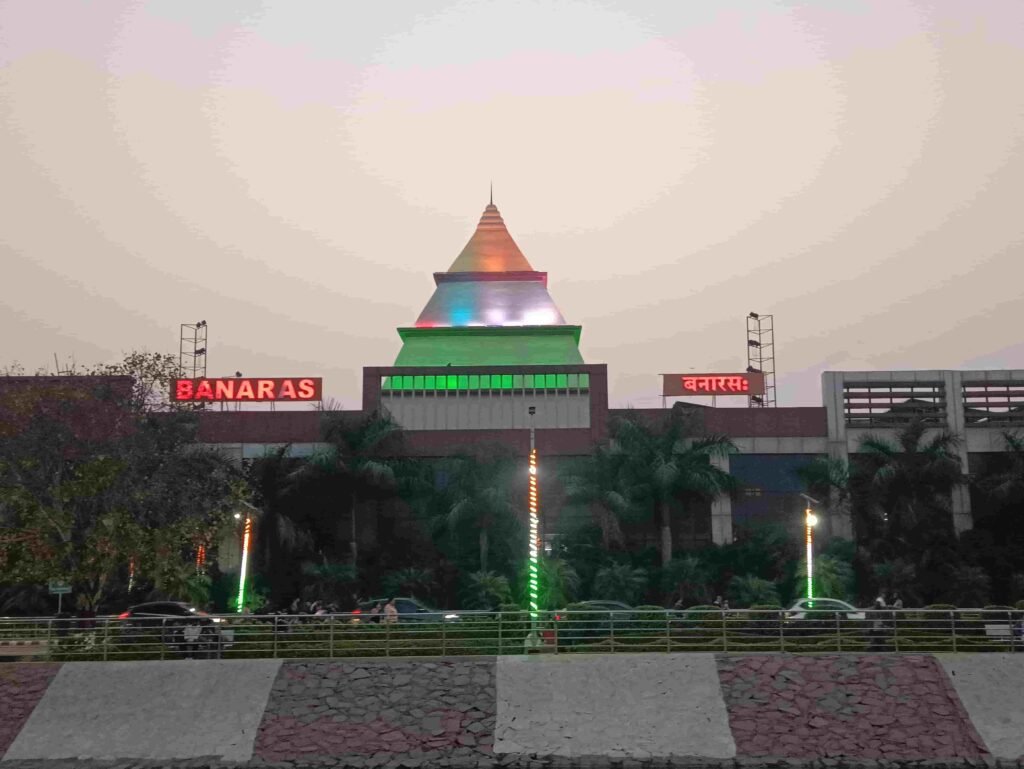
If you are coming from outside the city, the nearest airport is Lal Bahadur Shastri International Airport (VNS). You can check affordable flights on Google Flights for better deals. For those traveling by train, [Varanasi Junction] and [Banaras Station] are the key arrival points.
We recommend following the IRCTC 60-day advance booking rule, as trains to the holy city are often fully booked during peak seasons and festivals.
Must-Visit Highlights and Local Traditions Summary
- The Marble Walls: Intricate carvings of Ramayana scenes on high-quality marble.
- The Puppet Museum: An engaging visual treat on the upper floor for children.
- Tulsidas Manuscript: Explore the place where the legendary saint lived and worked.
- Manas Pushpa: A local bookstall for authentic spiritual literature.
Food
- Try the famous Banarasi Kachori-Sabzi at nearby stalls.
- The Rabri-Lassi in the [Durgakund] market is a must-have treat.
Hotels
- Look for stays in the [Assi Ghat] or [Lanka] area for easy access.
- Heritage guesthouses provide a traditional spiritual experience.
Must-Visit
- [Durga Temple] (Monkey Temple) is just a 5-minute walk away.
- [Sankat Mochan Temple] is located very close to this complex.
Local Tip: Visit the [Tulsi Manas Temple] during the Shravan month (July-August) when a special puppet show and traditional festivities make the atmosphere even more divine.
Disclaimer: The transport and booking details are based on current operational standards and religious calendars.