
Quick Answer: Kashi and France may seem worlds apart, yet both offer rich traditions of craftsmanship, artistic expression, intellectual inquiry and the enjoyment of everyday life. Banarasi silk, Indian philosophy, classical music, Ganga Aarti and the French idea of Art de Vivre provide meaningful ways to explore this cultural dialogue—without overlooking the differences between the two societies.
What connects the historic lanes of Kashi with the elegance associated with France? The answer is not a single fashion trend or a direct historical link. It is a wider conversation about how people preserve artistic traditions, search for meaning, appreciate beauty and pass knowledge from one generation to another.
Varanasi, also known as Banaras or Kashi, is one of India’s major centres of religious life, music, traditional crafts and learning. France has its own celebrated traditions of fashion, gastronomy, philosophy and the arts. Looking at these cultures together offers an engaging perspective on heritage, creativity and the different ways people give meaning to daily life.
This is a cultural comparison, not a claim that the two places share identical histories. Their differences are part of what makes the conversation interesting.
1. Banarasi Silk and French Fashion: Two Expressions of Elegance
Banarasi silk is celebrated for its brocade work, intricate motifs and the skill required to create richly decorated textiles. Used especially in wedding and ceremonial clothing, it represents a living craft tradition in which design, material and technique come together.
French fashion, meanwhile, is internationally associated with couture, tailoring, textiles and the work of designers who combine craftsmanship with changing ideas of style. These traditions developed in different social and historical settings, but both demonstrate how clothing can carry cultural identity as well as aesthetic value.
The connection is best understood as a comparison of creative approaches rather than an assumption that French fashion houses routinely use Banarasi silk. Specific collaborations or textile uses should be named only when reliable documentation confirms them.
What the two traditions can teach us
- Banarasi weaving: the importance of inherited techniques, motifs and specialist craftsmanship.
- French couture: the role of design, precision, tailoring and the presentation of finished garments.
- A shared question: how can traditional skills remain relevant while responding to new tastes and markets?
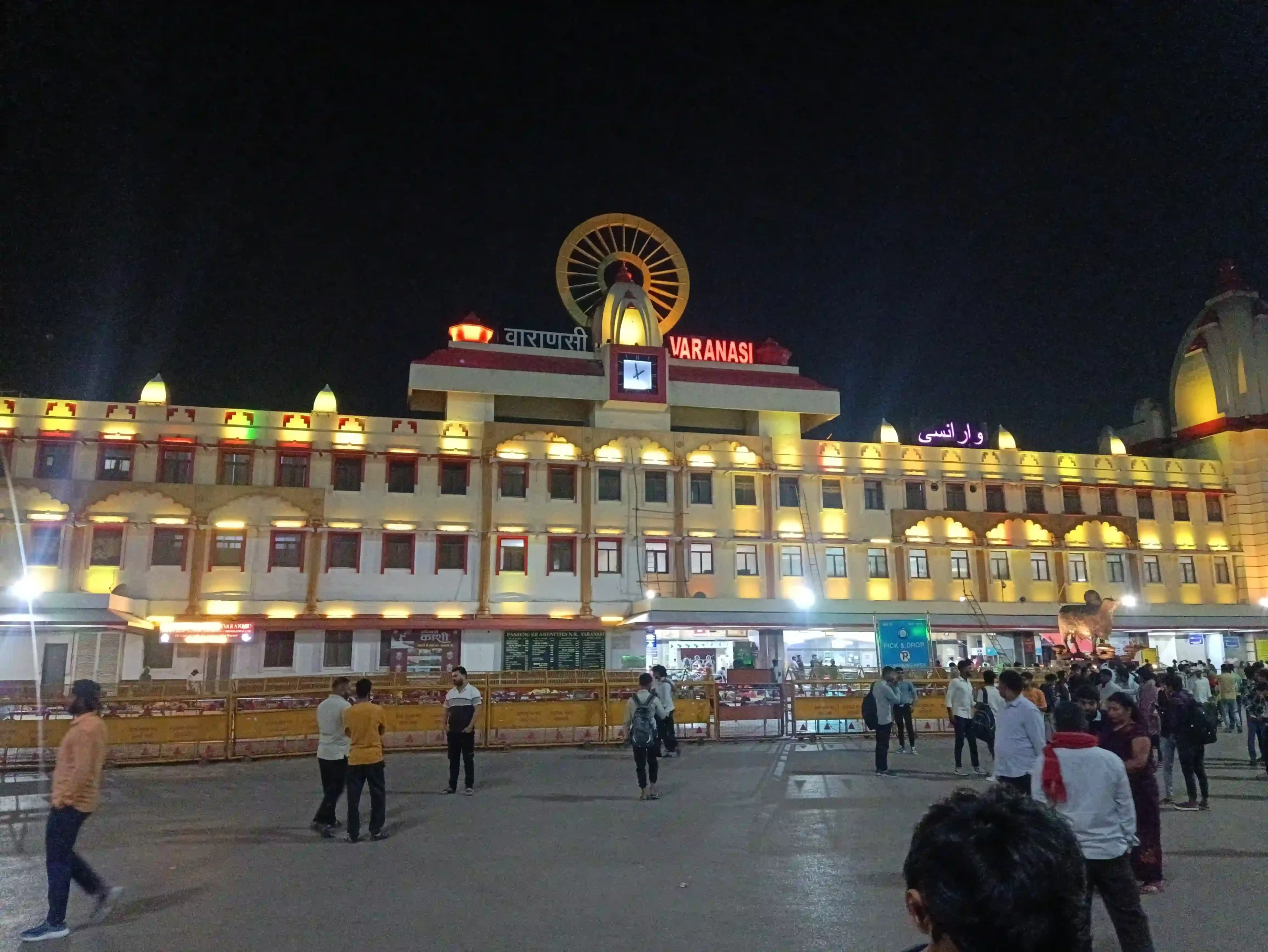
For visitors interested in traditional Indian textiles, a visit to a reputable craft centre or a workshop that welcomes visitors can provide more insight than shopping alone. Ask about the weaving process, the materials used and the difference between handloom work and machine-made imitations.
2. The Art of Weaving: Patience, Skill and Cultural Memory
A finely woven textile is the result of more than an attractive pattern. It depends on preparation, design, the arrangement of threads and the careful coordination of repeated movements. In Banaras, weaving knowledge has been passed through generations of artisans, although working conditions and production methods vary from one workshop to another.
France also has long-established craft traditions, including silk-related heritage in Lyon, textile design and specialist techniques used in luxury fashion. This does not mean the two traditions are identical. Rather, both provide examples of how specialised knowledge can become part of a region’s cultural identity.
Why craftsmanship matters today
- It preserves practical knowledge that may not be captured fully in written records.
- It gives skilled makers a role in the survival of local traditions.
- It connects a finished object with the people, tools and techniques behind it.
- It encourages visitors to consider provenance, quality and fair value rather than appearance alone.
Travellers who want to learn about Banarasi textiles can explore the city’s craft heritage and the official information provided by the Varanasi district administration. Availability of demonstrations, workshops and visitor access should be confirmed before travelling.
3. Spirituality, Philosophy and French Scholarship on India
Kashi has long been associated with Hindu pilgrimage, religious learning, Sanskrit scholarship and debates about life, death, liberation and the nature of reality. Its temples, riverfront and teaching traditions have made it an important place for people seeking religious understanding as well as for researchers studying Indian society and thought.
There is also a documented history of French intellectual engagement with Indian languages, texts and religions. The Bibliothèque nationale de France’s France–South Asia heritage project describes the development of Indian studies in France and highlights scholars such as Eugène Burnouf, Louis Renou, Sylvain Lévi and Jean Filliozat. Their work contributed to the European study of Sanskrit, Indian religions and related intellectual traditions.
This history needs an important distinction: French scholarship on India is not the same as proof that every scholar studied in Kashi, practised yoga there or followed a particular spiritual teacher. The broader connection is established; individual journeys should be described only where biographies or research records support them.
From academic study to personal reflection
For a scholar, Kashi may be a place to investigate texts, languages, religious practice or the relationship between sacred space and everyday society. For a spiritual traveller, it may prompt questions about impermanence, discipline, devotion and the search for meaning. These interests can overlap, but they are not interchangeable.
Yoga and Indian philosophical traditions also attract international interest. A thoughtful account of that interest should avoid treating Indian philosophy as one single system: Hindu philosophical schools, Buddhist thought, yoga traditions and devotional practices have distinct histories and ideas.
For visitors, listening respectfully to local teachers, visiting museums and learning about the historical context of sacred places can make the experience more meaningful than relying on romantic images of an ancient city.
4. Indian Classical Music and the Banaras Musical Tradition
Music is one of the strongest cultural dimensions of Kashi. The city is associated with vocal and instrumental classical music, devotional singing, folk traditions, dance and the distinctive musical lineages commonly known as gharanas. The official Varanasi culture and heritage page also recognises the city’s long-standing musical and performing-arts traditions.
Indian classical music has listeners and students around the world, including in France. Sitar and sarod are important instruments within Hindustani classical music, while tabla provides rhythmic accompaniment and can also be performed as a solo instrument. Each instrument has its own repertoire and lineages; they should not all be described as belonging to a single Banaras gharana.
A documented French connection: Patrick Moutal
One concrete example is French sitarist and musicologist Patrick Moutal. Biographical accounts report that he travelled to India as a young man, studied at Banaras Hindu University’s Faculty of Performing Arts and spent many years in Banaras. His career offers a specific example of sustained musical study in the city, rather than a generalised claim that many French artists have followed the same path.
For background on his musical and academic career, see the Patrick Moutal biography. For publication-quality claims about qualifications, dates or teachers, check the biographical references cited there or a primary institutional biography before making more detailed assertions.
What makes Banaras music distinctive?
- Tabla: the Benares tabla tradition is known for a powerful, resonant style and a substantial solo repertoire. The Indian government’s handicrafts portal provides a historical overview of Banaras tabla.
- Vocal music: the wider musical life of Banaras includes classical forms and expressive traditions such as thumri, alongside devotional and folk music.
- Learning by listening: the guru–shishya tradition emphasises sustained practice, close observation and learning directly from an experienced teacher.
- Living performance: music can be encountered in formal concerts, cultural events and selected devotional settings, though performances are not guaranteed at any particular location or time.
For a French visitor, learning about Kashi’s music can mean attending a properly organised concert, studying with a qualified teacher or simply listening with care. It is better to ask about the musician, tradition and context than to assume that every performance represents the same style.
5. Art de Vivre: The French Art of Living and the Rhythm of Kashi
Art de vivre literally means “the art of living.” In the French cultural context, it is often associated with the appreciation of food, design, conversation, culture, conviviality and the quality of everyday experiences. Campus France’s guide to the French art of living describes these themes through gastronomy, elegance, cultural activities and celebration.
It would be too simple to suggest that every French person shares one philosophy of life. The phrase describes a broad cultural ideal, not a rule that applies to all individuals. Yet it provides a useful starting point for comparing how people in different places find meaning in ordinary routines.
What a visitor might notice in Kashi
At dawn, the riverfront begins to stir. Boats move across the Ganga, worshippers arrive at the ghats, vendors prepare for the day and the sound of bells or prayers may drift through nearby streets. Later, the city becomes busy with markets, schoolchildren, workers, pilgrims, residents and visitors.
For some French travellers, these scenes may invite reflection on time, ritual, community and the relationship between daily life and spiritual practice. Others may be more interested in architecture, photography, food or history. No single reaction should be assumed.
The comparison with Art de vivre is therefore interpretive: it places two different cultural approaches to everyday experience alongside each other. It does not claim that Kashi is untouched by modern life or that France and India understand spirituality in the same way.
6. Art, Photography and the Practice of Looking Closely
Both Kashi and France have inspired artists, writers and observers, but their artistic histories are varied and cannot be reduced to a single shared style. Varanasi’s riverfront, narrow lanes, temples, workshops and everyday street life offer many subjects for photography and visual storytelling. French artistic traditions, in turn, include painting, photography, architecture, fashion and design across many different movements.
A cultural dialogue between the two can focus on the way artists notice detail: the texture of silk, the geometry of a doorway, the movement of water, a musician’s hands or the changing light on an old building.
Rather than attributing a specific photograph or artistic influence to a famous French photographer without documentation, it is more accurate to discuss the broader practice of observing place, light and human activity. If a named artist’s connection with Varanasi is included in a future update, it should be supported by a reliable catalogue, archive or biographical source.
Photography with respect
- Ask permission before taking close-up portraits of residents, priests, artisans or performers.
- Respect restrictions in temples, museums and private workshops.
- Avoid interrupting prayers or ceremonies for a photograph.
- Represent the city as a living community, not only as an exotic or timeless scene.
7. Places to Explore in Varanasi for Culture, Craft and Reflection
Travellers interested in the relationship between art, spirituality and daily life can build a visit around a few different experiences. Confirm opening hours, visitor access and local conditions before setting out.
Dashashwamedh Ghat
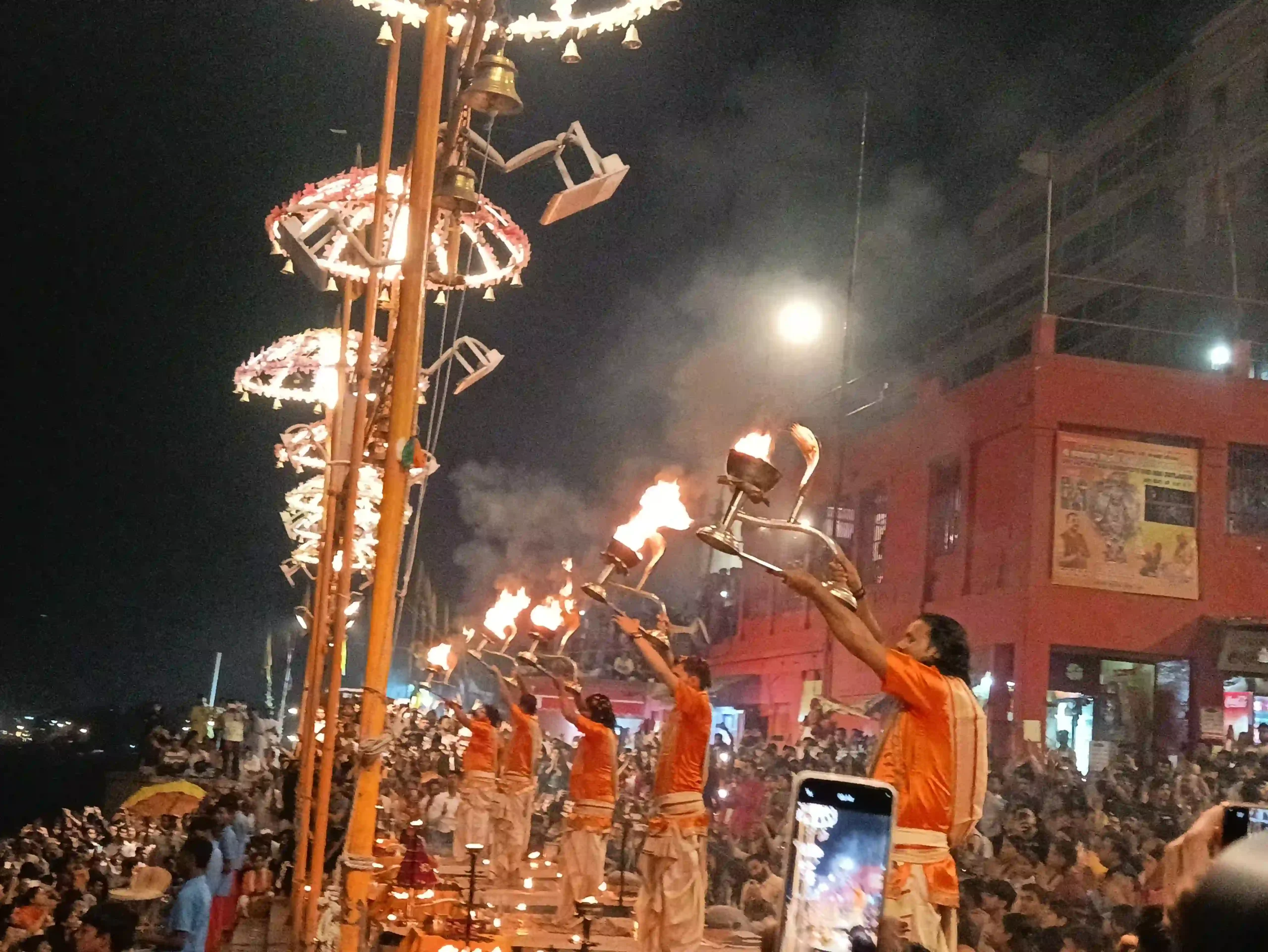
One of Varanasi’s best-known riverfront locations, Dashashwamedh Ghat is closely associated with the evening Ganga Aarti. Arrive early if you want to understand the setting before the ceremony becomes crowded. Keep a respectful distance from worshippers and follow local instructions.
View Dashashwamedh Ghat on Google Maps · Read more in our Dashashwamedh Ghat guide.
Deendayal Hastkala Sankul
Also known as the Trade Facilitation Centre and Craft Museum, this centre is relevant to travellers interested in Indian handicrafts and traditional production. Check the official information for current visitor details before planning a visit.
Official Deendayal Hastkala Sankul information · View on Google Maps.
Madanpura and the weaving neighbourhoods
Madanpura is associated with Varanasi’s weaving community. Exploring such neighbourhoods can offer a closer look at the city’s textile heritage, but workshops are working spaces and are not all open to visitors. Arrange a visit through a reputable local contact and ask permission before photographing people or their work.
View Madanpura on Google Maps.
Experience the city beyond its famous sights
Leave time for a guided heritage walk, a carefully chosen classical music performance or a conversation with a craftsperson. The quality of these experiences depends on the guide, event and access available on the day, so confirm arrangements rather than relying on assumed schedules.
8. Food: A Daily Expression of Culture
Food offers another way to compare cultural traditions without pretending that they are the same. French gastronomy often places emphasis on regional produce, technique, presentation and the shared experience of a meal. Varanasi’s food culture includes street snacks, sweets, seasonal preparations and dishes connected with local customs and religious occasions.
One well-known example is Banarasi tamatar chaat, a distinctive local snack with a flavour profile different from the chaat found in many other Indian cities. Kachori-sabzi, sweets and Banarasi paan are also commonly associated with the city’s food identity, although availability and recipes vary between vendors.
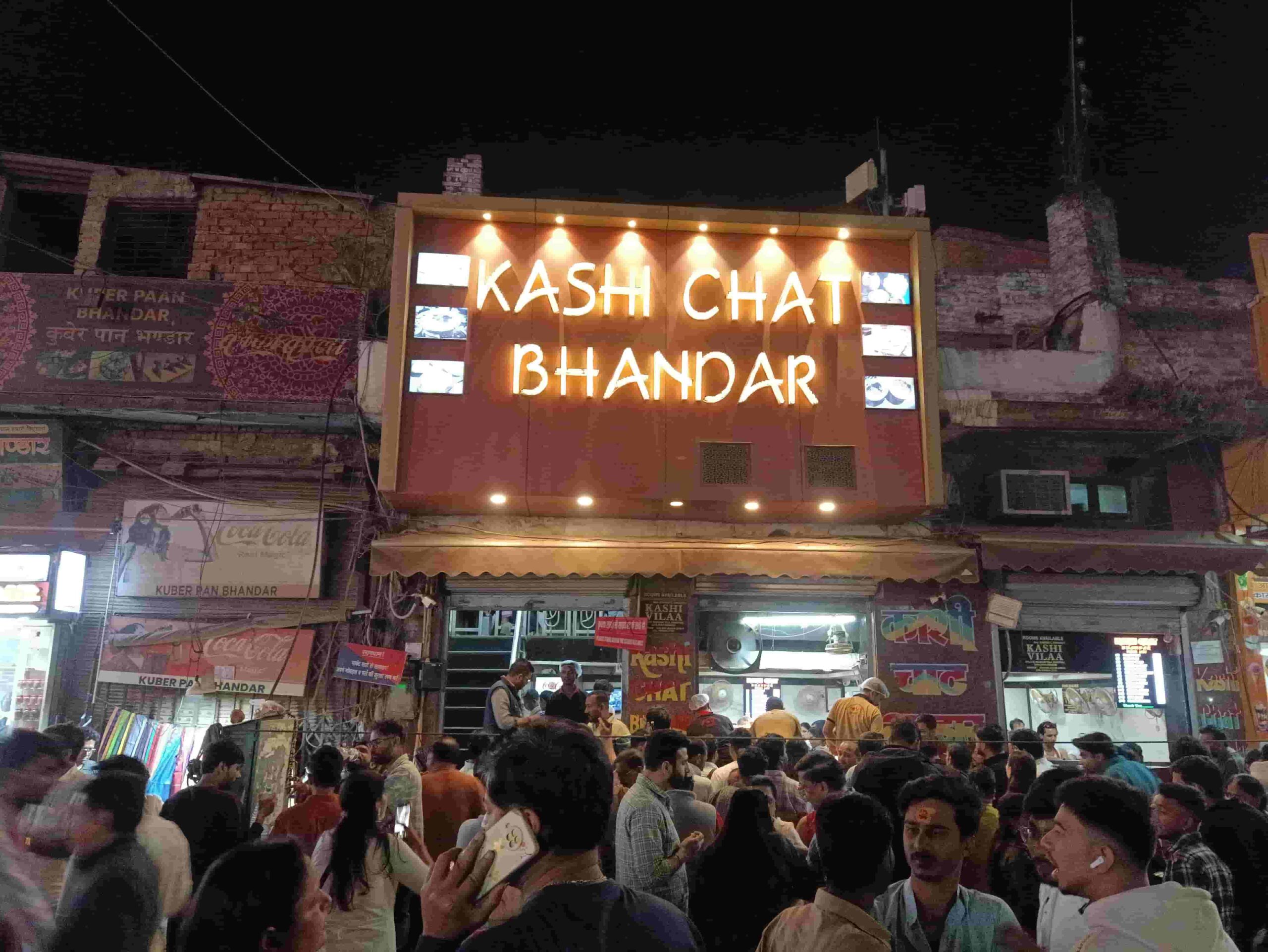
For visitors comparing food traditions, the most interesting questions are practical ones: Which ingredients are local? How is a dish prepared? Is it connected with a festival or a particular neighbourhood? How do people usually eat and share it?
Choose busy, hygienic food establishments, check ingredient details where necessary and be cautious with drinking water and unfamiliar foods if you have a sensitive stomach.
9. Travelling from France to Kashi
For a traveller coming from France, Varanasi can be part of a wider journey through northern India. Travel routes and flight schedules change, so check current options rather than assuming that a direct flight is available.
Plan your journey
- Flights: Compare current routes from your departure city in France to Varanasi, also called Lal Bahadur Shastri International Airport (VNS). Some itineraries may require a connection through another Indian or international airport. Check baggage rules and transit requirements before booking.
- Visa: Review the applicable Indian visa requirements through the official Indian Visa Online portal. Eligibility, documentation and processing rules can change.
- Trains: If travelling within India, consult the official IRCTC website for current schedules, availability and booking conditions.
- Accommodation: Choose a stay according to your mobility needs, budget and preferred neighbourhood. Riverside locations can be atmospheric, while access by vehicle may be limited in narrow lanes.
- Time for the city: Allow enough time for travel delays, rest, heritage visits and the experience of the ghats at different times of day.
For flight research, you can start with Google Flights. Treat displayed fares and schedules as changeable and confirm the final details with the airline or booking provider.
Travellers who plan to continue to Ayodhya can also read our Ayodhya and Kashi travel guide for international visitors for additional planning context.
10. Practical Tips for French and International Visitors
- Dress respectfully: Clothing expectations differ by site. Carry something suitable for religious places and follow local rules.
- Check photography rules: Do not assume that photography is permitted inside every temple, museum or ceremony area.
- Prepare for crowds: Popular ghats and narrow lanes can become congested, especially during festivals and peak visiting periods.
- Confirm event details: Music performances, guided walks and craft demonstrations depend on schedules and availability.
- Use reliable transport: Confirm pickup points and walking access in advance, especially if your accommodation is inside a narrow lane.
- Buy crafts thoughtfully: Ask about materials, production methods and whether an item is handwoven or machine-made.
- Stay flexible: Weather, traffic, ceremonies and local conditions can affect a day’s plan.
11. Kashi and France: A Cultural Dialogue, Not a Claim of Identical Histories
The relationship explored here is best understood through several complementary themes:
- Craft: Banarasi silk and French textile traditions show how specialised skills can become part of cultural identity.
- Scholarship: French research into Sanskrit, Indian religions and philosophy provides a documented intellectual connection with India, although individual scholars’ links to Kashi differ.
- Music: Varanasi’s musical lineages and the documented study of Hindustani music by French musicians offer a specific example of cultural learning across borders.
- Daily life: The idea of French Art de Vivre can be used to reflect on how visitors experience food, ritual, public spaces and everyday rhythms in Kashi.
- Art and observation: Both places invite close attention to materials, architecture, sound, light and human activity, while retaining their own histories and artistic languages.
These connections do not require a claim that France and Kashi share one continuous historical route or that their philosophies are interchangeable. Their value lies in the opportunity to learn across differences, with evidence, curiosity and respect.
Conclusion: Discovering Kashi Through Craft, Thought and Everyday Life
Kashi and France offer a compelling cultural comparison because both have traditions that place value on skilled work, artistic expression and the experience of daily life. Banarasi silk reveals the patience of the artisan; Indian classical music demonstrates the depth of a living teaching tradition; French scholarship records a long intellectual engagement with Indian texts and ideas; and Art de Vivre provides a lens through which visitors can reflect on the texture of everyday experience.
For a traveller from France, Kashi is not merely a destination to photograph. It is a living city to explore thoughtfully—through its riverfront, neighbourhoods, music, crafts, food and conversations with the people who sustain its traditions.
Planning an Ayodhya and Kashi Visit?
Explore our practical guides to Varanasi’s ghats, accommodation and travel planning before building your itinerary.
Frequently Asked Questions
1. What is the cultural connection between Kashi and France?
The most useful connections are comparative and documented: French scholarship on Indian languages and religions, international interest in Hindustani classical music, and parallels in craftsmanship and cultural life. They do not imply that the two places share identical histories.
2. Have French musicians studied Indian classical music in Varanasi?
Yes. French sitarist and musicologist Patrick Moutal is a documented example of a French musician who studied at Banaras Hindu University’s Faculty of Performing Arts. This example should not be taken as evidence that all French musicians have studied in Kashi.
3. What does Art de Vivre mean?
Art de vivre means “the art of living.” In French cultural usage, it often refers to the appreciation of food, culture, design, conviviality and the quality of everyday experiences.
4. Where can visitors learn about Banarasi silk and traditional crafts?
Visitors can research Varanasi’s craft heritage through the district administration and the Deendayal Hastkala Sankul information page. Workshop access and demonstrations should be confirmed in advance.
5. What should French visitors know before travelling to Varanasi?
Check current Indian visa requirements, flight and train schedules, accommodation access, local photography rules and event details. Plan respectfully around religious spaces and allow flexibility for crowds and local conditions.
Sources and Further Reading
The following references support the article’s historical, cultural and practical context. They are provided so readers can explore the subject further.
- Bibliothèque nationale de France — Rise of Indian Studies: French scholarship on Indian languages, philosophy and religions.
- Bibliothèque nationale de France — The Collège de France and India: the history of Sanskrit studies and scholarly connections with South Asia.
- Campus France — The French Art of Living: an overview of the cultural idea of Art de Vivre.
- District Varanasi — Culture and Heritage: official context for Varanasi’s music, arts and cultural traditions.
- Government of India’s handicrafts portal — Banaras Tabla: background on the Banaras tabla tradition.
- Indian Visa Online: official visa information for international visitors.